Multilingual SEO for service businesses starts with a delivery decision: which customers can your team actually serve in each language? An Istanbul company may receive Turkish enquiries from local owners, English enquiries from overseas procurement teams, and Arabic enquiries from Gulf buyers. Those groups may need the same core service, but they can ask different questions before contacting you. Translating every page at once can spread editorial and operational attention too thin. A more useful starting point is a small set of complete service journeys, with accurate information, working forms and clear ownership. This guide explains how to plan those journeys and check the technical connections without turning a lightweight website into a complicated publishing system.
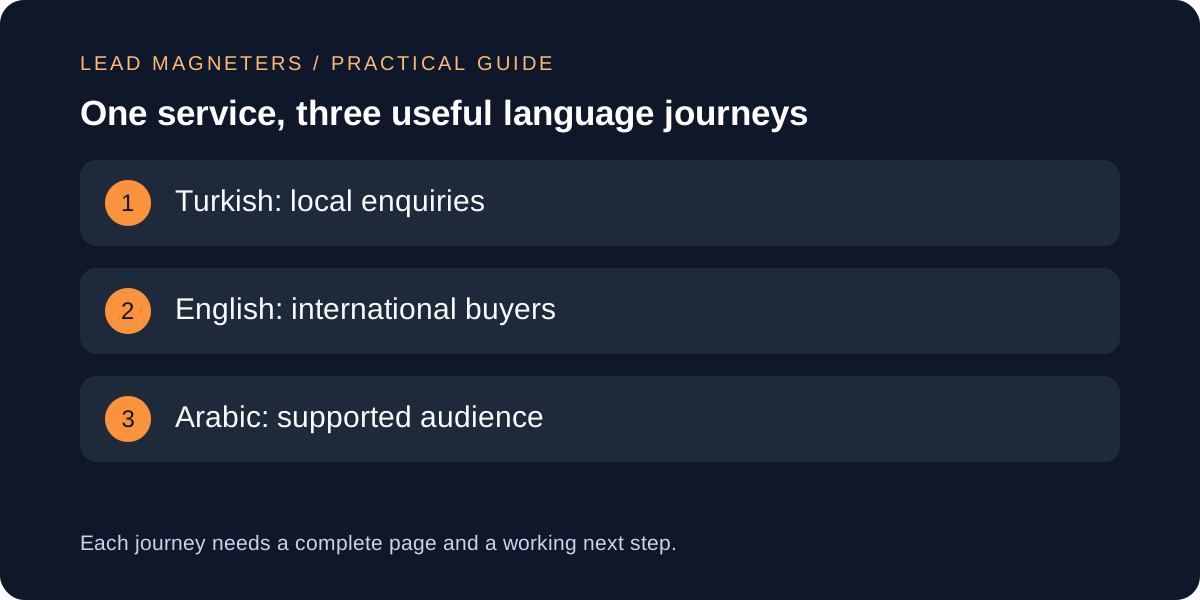
Choose languages from real demand and delivery capacity
Build a simple audience worksheet before selecting a translation plugin or URL structure. For each language, record the services you can deliver, who answers enquiries, the expected response process and the evidence customers need. Review actual sales questions and available search data rather than assuming every visitor in a country prefers the same language. An English-speaking buyer in Istanbul and a Turkish-speaking buyer abroad illustrate why language and geography should be considered separately.
Start with one commercially important journey per supported language. For example, a web development company might translate its main service explanation, a relevant buying guide, company information and the contact process. A translated homepage that leads to an untranslated enquiry form is an incomplete launch. Assign an owner who can keep this small group accurate when your scope changes. Our market expansion guide can help frame the audience decision before the technical SEO work begins.
Translate the buyer's questions as well as the words
Give a translator or bilingual reviewer more than the source text. Include the intended buyer, service boundaries, approved terminology and examples of questions that arrive during sales calls. A literal translation of an English marketing phrase may sound unnatural or describe a different service in Turkish. Review headings, navigation, form labels, validation messages and confirmation text together. The page should feel like a coherent service conversation, not a collection of translated fragments.
Local adaptation should reflect facts. Mention a supported meeting language or an established delivery process when it helps the reader, but do not invent an office, local team or regional case study. If pricing is displayed, have the business owner confirm currency and what is included. For an Arabic version, check reading direction, number formatting and mixed-language product names on a real mobile layout. Keep essential explanations as selectable text rather than embedding them in images that require separate translated artwork.
Give each language version a stable address
Choose a URL convention your team can maintain. Language folders can make a small website easier to organise, while other architectures may suit an established business. The practical requirement is that each version has a stable address you can link to, test and include in your publishing inventory. Document the mapping between equivalent pages so that a language switch from a service explanation opens the matching explanation rather than always returning to the homepage.
Google recommends different URLs for different language versions and clear ways for people to navigate between them. Avoid forcing every visitor into a language based only on an estimated location. Someone researching an Istanbul supplier from another country may still want the Turkish page. Offer an obvious language choice, preserve it where appropriate, and let the person change it. Test these controls without assuming that a crawler or a new visitor has already accepted cookies or selected a preference.
Review the website development foundation →
Use hreflang only for genuine equivalents
Hreflang helps Google understand relationships between language or regional versions. In Google's documented HTML approach, each page lists itself and its alternate versions using fully qualified URLs, and the relationships should be reciprocal. Use supported language and optional region codes rather than inventing market abbreviations. Choose a single maintainable implementation method, such as HTML or a sitemap, and verify its output on the deployed site.
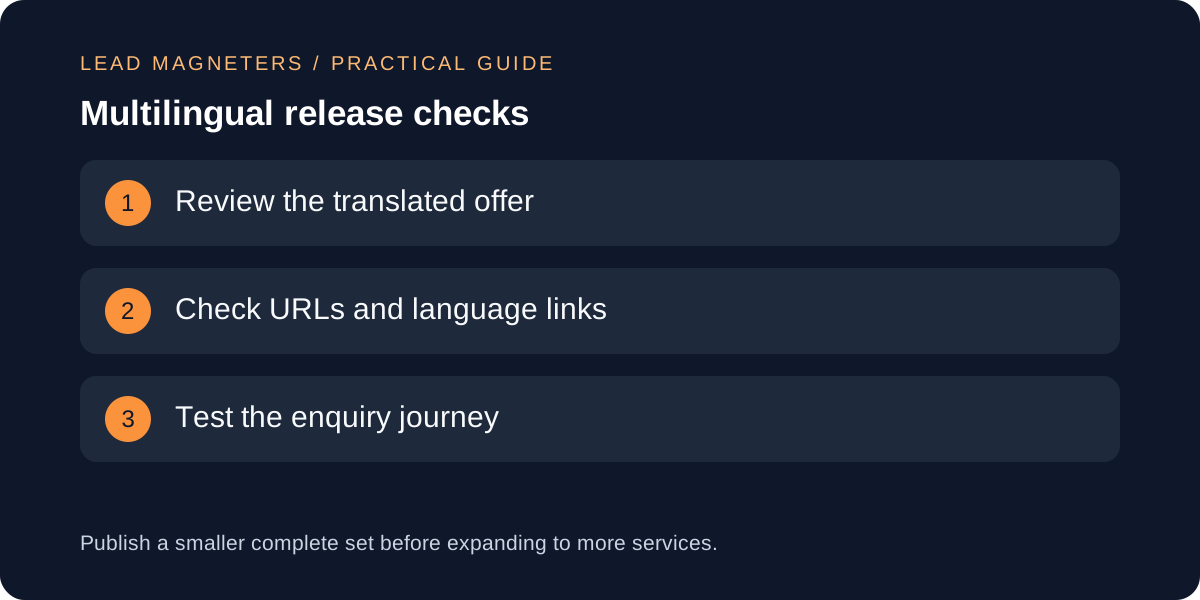
Prepare a release table with a row for each service and columns for its available languages. Empty cells mean a translation is not ready; they should not become links to a placeholder. A general English service page and an Arabic article about a related question are not equivalent merely because they share a topic. Keep canonical decisions consistent with the actual content, and avoid directing every translated page to the English canonical by default. Ask a developer to inspect a representative group before applying the mapping across the website.
Test the complete enquiry path in every language
Create a test sheet with the entry page, selected language, device, expected destination and observed result. Open the service URL directly, follow a contextual article link, switch languages and submit an authorised test enquiry through your normal testing procedure. Verify that the receiving team can understand the information and that the confirmation message accurately describes what happens next. A working submit button alone does not prove the whole journey is ready.
Include unusual but realistic inputs: an international phone format, an accented company name and a long project description. Check mobile navigation and whether translated headings wrap without hiding controls. If the sales team only responds in certain languages, make that clear before submission. Keep test data separate from genuine leads and remove it through your approved process. The output of this review should be a short issue list with owners, not a blanket statement that the site is multilingual because several flags appear in its header.
Maintain translations as a connected publishing system
Add translation status to the same editorial inventory used for the original pages. Record the owner, last substantive review and related URLs. When a service changes, identify every affected version before publishing the update. For small teams, a simple checklist beside the content is often more reliable than a sophisticated workflow nobody maintains. Prioritise high-intent pages and incomplete journeys before adding another language or another regional landing page.
Review performance by language and by business outcome. Search impressions can help reveal discovery, while enquiry quality tells you whether the page attracts relevant work. Small samples need context: one international contract can matter more than many unrelated contacts, but it cannot establish a repeatable trend on its own. Bring a list of your existing language URLs, supported services and unresolved buyer questions to a discussion of SEO management. That gives the review a concrete scope and keeps expansion focused on pages your team can maintain and customers can actually use.