A negative keyword review helps a service business decide which Google Ads searches it does not want to pay for. The difficult part is distinguishing irrelevant intent from a relevant buyer who has not converted yet. A company in Istanbul may receive searches from local customers, international buyers, job seekers and people looking for training. Some exclusions are straightforward; others can remove useful demand if applied too widely. This guide provides a practical review workflow for Search campaigns, including a decision log and a way to test proposed exclusions. It does not promise a particular saving or suggest that a longer negative keyword list automatically creates a better advertising account.
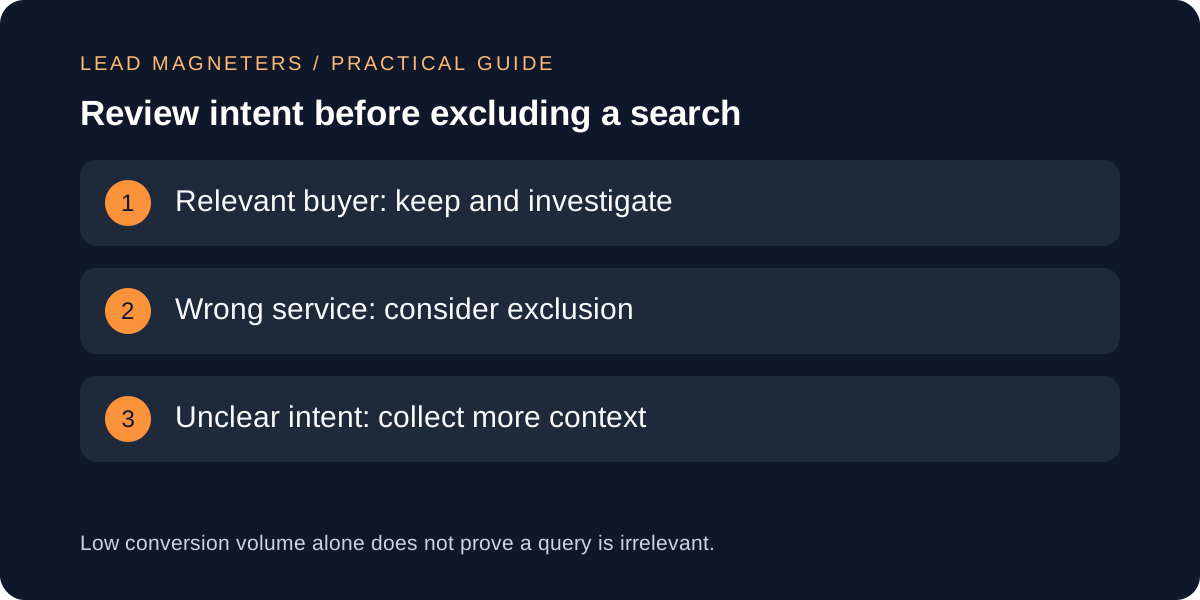
Start with the service boundary and the buyer
Write down what the campaign is intended to sell, where the company can deliver it and which enquiries the team can support. Include services that sound similar but are outside the offer. For example, a company building custom websites may not sell downloadable themes, while another company may offer both. A negative keyword that is sensible for the first business could be harmful for the second. Use the approved offer as the reference instead of copying a generic list from another account.
Separate commercial boundaries from assumptions about buyer language. Words such as price, example or comparison can appear in serious research. Someone comparing website costs may be preparing a real project, even if they are not ready to submit a form immediately. Explain why a search is incompatible with your offer before excluding it. For multilingual campaigns, have someone familiar with the language review ambiguous phrases; a translated word can carry a different meaning in a customer conversation.
Read search terms alongside the actual journey
Google's search terms report shows queries associated with ad activity, subject to reporting limitations. Review it with the campaign, landing page and conversion definitions visible. A query can be relevant while the destination page fails to explain the service, or while the form is broken. Excluding the query would hide the symptom without fixing the journey. Keep a separate category for relevant searches that need a better page, clearer advertisement or further investigation.
Add sales feedback where it is available. If enquiries repeatedly request a service you do not provide, compare their wording with the report and the advertisement that attracted them. If the enquiries are relevant but unanswered, examine follow-up before blaming targeting. Work with a consistent date range and account for the time customers normally take to decide. A handful of clicks is not enough to establish a stable commercial pattern, although an obviously unrelated meaning can justify a focused exclusion without waiting for a conversion study.
Choose match type and scope deliberately
Google documents different behaviours for negative broad, phrase and exact match in Search. Broad negatives require all included terms, phrase negatives depend on their order, and exact negatives exclude the matching query without additional words. These controls differ from positive keyword matching. Negative keywords do not expand to every synonym or singular and plural variation. Check the official reference when preparing a rule rather than assuming that the interface label behaves like ordinary keyword targeting.
Keep the scope as narrow as the business reason allows. A term irrelevant to one service campaign may be useful in another, so an account-wide exclusion needs a stronger justification than an ad-group exclusion. Record where the rule will apply and which team member checked the impact. If your account includes several business lines or languages, review shared lists particularly carefully. Avoid applying a Search workflow to Display, Video or another campaign type without checking the controls supported for that inventory.
Review campaign organisation →
Test exclusions against searches you want to keep
For each proposed rule, write two small lists: examples you intend to exclude and examples you want to remain eligible. This is a reasoning check, not proof that an ad will serve. For instance, a company that does not teach design may want to exclude searches clearly asking for a training course, while keeping searches from a training company that needs a website. A broad single-word exclusion can fail that distinction. Refine the phrase or scope until the business intention is clear.
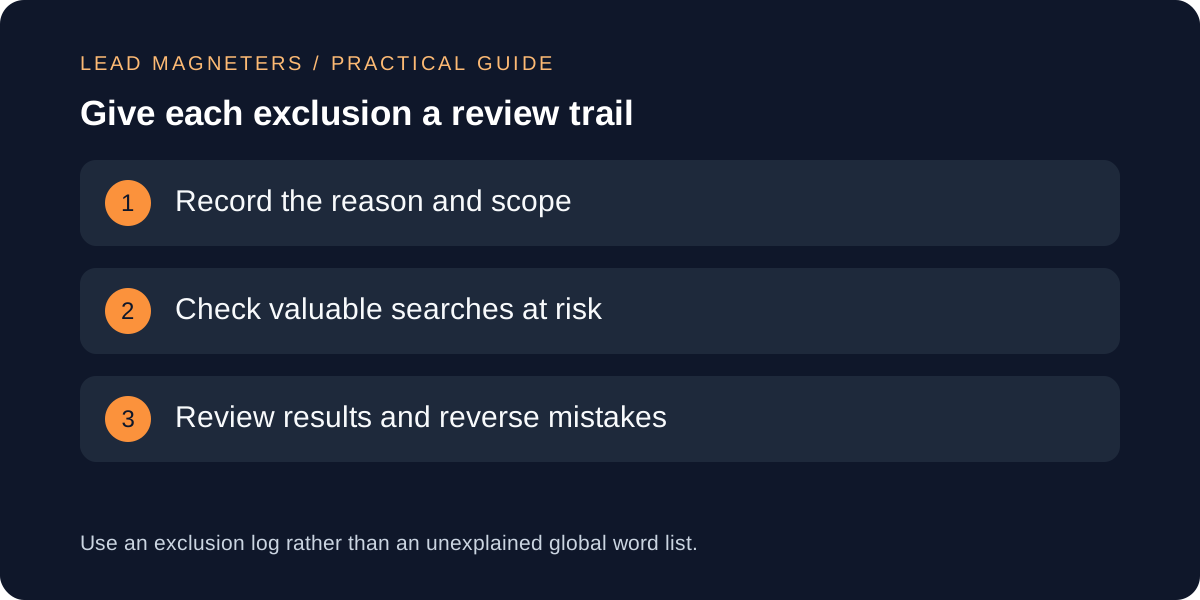
Use hypothetical examples openly and keep the real search evidence in the account review notes. Do not publish customer enquiry text or personal information as examples. Ask a second reviewer to challenge rules that affect a large share of activity or a commercially important theme. If the reviewer cannot explain what the exclusion does in plain language, it is not ready to apply. Save the previous configuration so that a mistaken change can be identified and reversed through the normal account controls.
Measure the result without celebrating empty savings
A reduction in spend can mean that waste was removed, but it can also mean that useful reach was blocked. Review the remaining search mix, qualified enquiries and relevant campaign delivery together. Compare equivalent periods where possible and note other changes, such as a new budget, a different landing page or seasonal demand. If several things changed at once, avoid attributing the entire result to the negative keyword update. Keep the conclusion proportional to the evidence.
An illustrative review might find fewer enquiries after excluding a training-related theme, but a similar number of qualified service requests. That would support investigating whether the removed traffic was unhelpful; it would not establish a universal rule about training words. Another review may reveal that an exclusion blocked a valuable buyer segment. Treat that as useful feedback and adjust the rule. The objective is a more relevant acquisition process, not a report that rewards every decline in clicks.
Maintain a short, explainable exclusion log
Store the proposed term, match type, application scope, reason, evidence date, reviewer and next review trigger. Add a note when an exclusion is changed or removed. This makes the account understandable when the offer expands or another manager takes over. Review the log when you introduce a new service, enter a new market or reorganise campaigns. An old rule may no longer reflect what the business can sell, even if it was correct when first created.
Set a review frequency appropriate to the amount of activity and the pace of account changes. High activity can justify closer observation, while a small campaign may need more time before drawing conclusions. Keep the review focused enough that it can be repeated carefully. For a marketing consultation, bring the campaign objective, a sample of search terms, the current exclusion lists and the definition of a qualified lead. Those inputs allow a concrete discussion about relevance, page quality and measurement rather than an unsupported promise to eliminate wasted spend.