A UTM naming plan makes campaign links understandable to everyone who publishes them. Without a shared convention, one newsletter can appear under several names and two unrelated initiatives can accidentally share a label. A service business does not need a complicated tracking system to start improving this. It needs a clear vocabulary, a small link register and a way to test the customer journey before distribution. This guide focuses on organising incoming campaign links for a team working across content, email and other referral placements. It complements an event measurement plan but does not replace it. Consistent labels help interpretation; they do not by themselves prove that a visitor became a qualified customer.
Decide which business question the labels should answer
Start with a question the team needs to answer after a campaign runs. For example, you may want to compare two newsletter placements promoting the same service guide, or distinguish a partner referral from your own distribution. Write the question in the campaign brief before assigning parameters. If nobody can explain how a field will be used, avoid inventing a complicated value merely because the field exists. The aim is a reporting vocabulary that supports decisions, not a long URL that appears sophisticated.
Separate the initiative from the individual link. A campaign may include several placements, creatives and publishing dates while still serving one objective. Decide what should remain constant and what needs a distinct label. For a hypothetical autumn website-planning initiative, the campaign identifier could remain stable while placement labels distinguish a newsletter introduction and a follow-up link. These are examples of an internal convention, not required Google values. Document the choice so another team member can add a link without accidentally creating a second campaign with a slightly different name.
Define a compact vocabulary and an owner
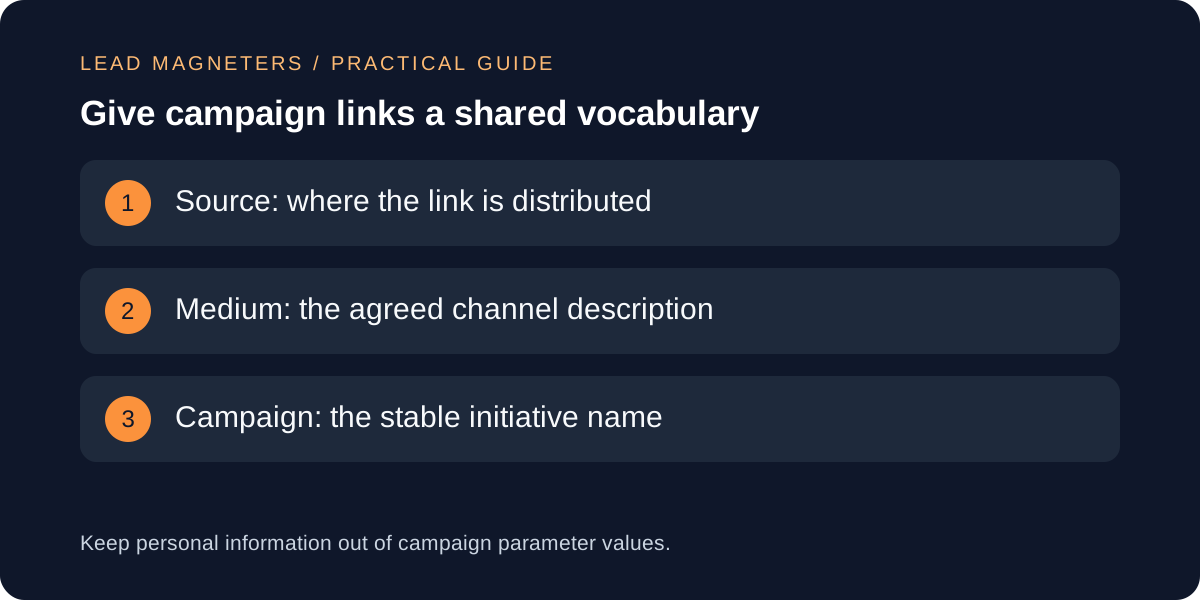
Google Analytics documents campaign parameters including source, medium and campaign, with additional fields for uses such as differentiating content. The values are case-sensitive, so inconsistent capitalisation can fragment reporting. Define the permitted names your team will use and keep them in one shared register. Use a clear source label for each distribution origin and an agreed medium for the channel. If channel grouping matters to your reports, validate how the chosen values are classified instead of assuming a custom label will automatically behave as intended.
Give one person responsibility for approving new names, with a backup when they are unavailable. This does not need to delay every publication: common sources and recurring placements can have preapproved values. Reserve review for new channels or ambiguous cases. Include examples and a short explanation beside each field so colleagues do not have to memorise abbreviations. Avoid labels that depend on one person's private understanding of the campaign. Someone joining the team later should be able to read the register and identify the initiative without searching old chat messages.
Build a link register that follows the real destination
For each outgoing campaign link, record the clean destination URL, parameter values, final tagged URL, placement, planned publication date and responsible owner. Add the status and the date it was tested. Keep the clean destination because it makes changes easier to audit and helps distinguish a content move from a naming correction. If the page has a permanent redirect, use its final destination where appropriate and test the complete URL. Do not assume that every redirect or publishing tool preserves campaign parameters correctly.
Keep personal information out of the values. Names, email addresses and customer-specific details do not belong in a public campaign URL that can be copied, logged or shared. Use non-personal campaign identifiers with a documented meaning. Check the final link for spelling, duplicate parameter keys and accidental spaces introduced during copying. An approved example in the register is more useful than a naming rule that nobody can apply. If links are generated automatically, verify the output from the actual publishing tool rather than only inspecting a template before its variables are replaced.
Review page moves before distributing links →
Respect existing advertising and internal navigation systems
Before adding manual labels to paid advertising links, identify how the account's existing tracking and analytics integrations work. Do not replace or strip platform-generated identifiers simply to make the URL look consistent with a spreadsheet. Ask the person responsible for measurement to review any interaction between automatic tagging, manual parameters and reporting. A naming exercise should not quietly change attribution settings or conversion configuration. Keep an implementation note describing which channels use manual campaign links and which rely on the established advertising integration.
Reserve the campaign-link convention for the incoming distribution situations it was designed to describe. Do not automatically add campaign labels to every navigation link between pages on your own website. Those links serve a different purpose, and internal interaction questions should be addressed in the measurement plan. For example, understanding clicks from an article to a service page is different from identifying the newsletter that originally brought someone to the site. Keeping the questions separate makes later reports easier to interpret and avoids turning ordinary internal navigation into a confusing collection of campaign names.
Test the customer journey and the reporting result
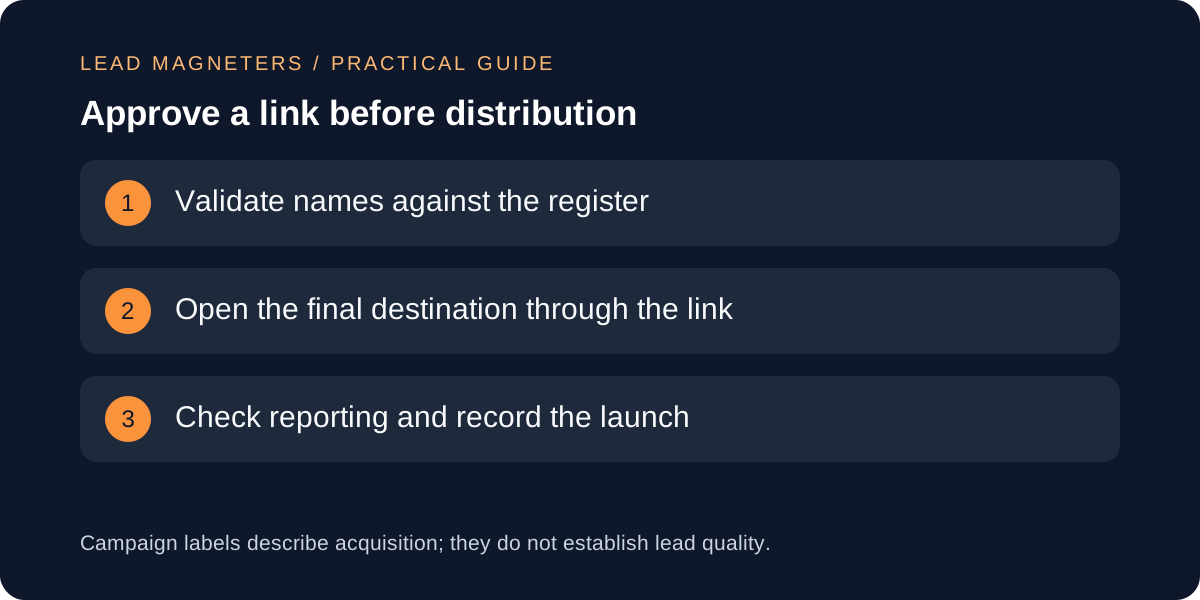
Open the exact link that will be published, preferably from the draft placement itself. Confirm that it reaches the intended page, that the language is appropriate and that the primary action works. Follow any redirect and inspect whether the expected parameters survive where required. Use an authorised test process for analytics, respecting the site's consent behaviour. A successful page load proves that the destination works, but it does not prove that reporting received and classified the campaign information as intended.
Record the expected source, medium and campaign, then compare them with the relevant analytics view when data is available. Allow for the reporting system's processing and the test conditions rather than immediately treating an absent row as a broken implementation. Investigate duplicate or unexpected values with the publishing owner. If a link is wrong after distribution, correct the editable placement and document the time of the change. Do not silently rename historical values in your analysis as though the original links had always used the new convention. Preserve the distinction when explaining campaign results.
Review outcomes beyond campaign traffic
Use consistent campaign labels as the beginning of analysis, then connect them with appropriate aggregate outcome information where your systems and permissions support it. A campaign that attracts visits is not automatically producing suitable enquiries. Compare the service requested, progression through the agreed lead stages and the team's ability to follow up. Avoid claiming certainty about an individual customer's journey when the available data is incomplete. Privacy choices, sharing and multiple devices can leave gaps that a tidy naming convention cannot remove.
Review the register after each meaningful campaign cycle. Retire confusing labels, document new ones and identify repeated publishing mistakes that a simpler workflow could prevent. Keep historical mappings so older reports remain understandable. For a consultation, bring a small set of live campaign links, the naming register and the business decisions the reports are meant to support. This creates a practical starting point for improving measurement without adding unnecessary website code. The goal is a repeatable publishing process whose links, destinations and reporting language can be checked by someone other than the person who created them.