A responsive search ad copy review examines the promises a customer may see before paying for traffic. It is more than checking spelling or filling every available headline field. Service businesses need copy that remains accurate across different combinations and leads to a page that explains the same offer. An agency in Istanbul serving local and international buyers may need to communicate delivery scope, language and a suitable next step without suggesting capabilities it does not have. This guide provides an editorial approval process for Search advertisements. Its examples are hypothetical copy exercises, not claims about campaign performance or wording guaranteed to increase conversions.
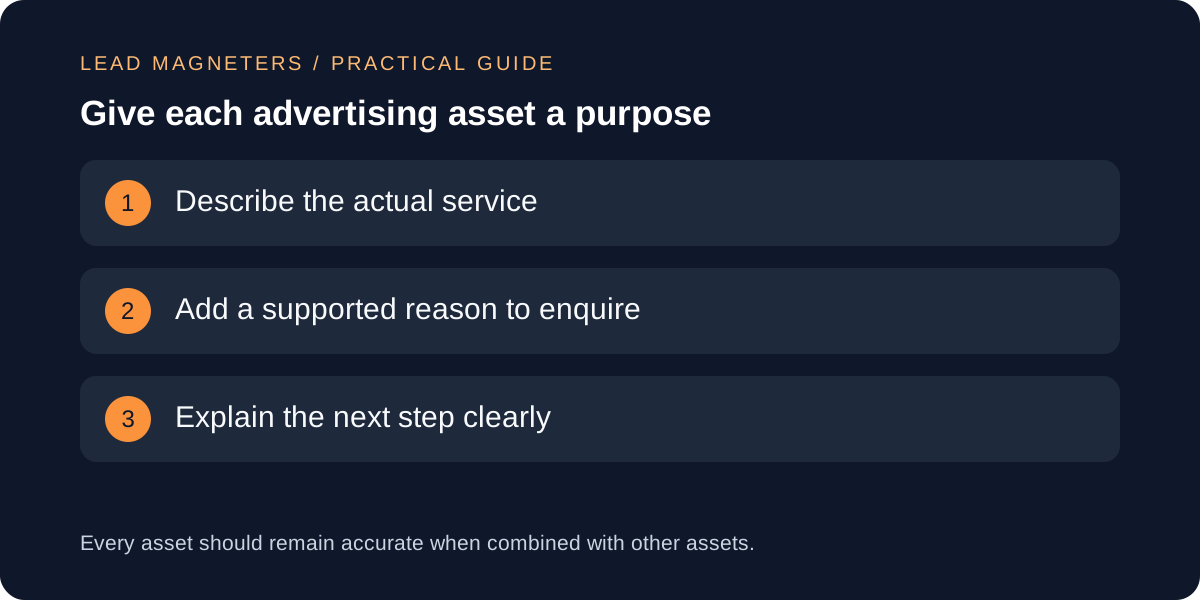
Build a claim sheet before writing headlines
Start by listing what the business can demonstrate about the advertised service. Separate deliverables, working arrangements and outcomes. A deliverable might be an agreed website scope; a working arrangement might involve remote project meetings. An outcome such as a particular revenue increase requires evidence and cannot be substituted for a clear service description. Ask the person delivering the work to approve this sheet before the copywriter turns it into short assets. This prevents the advertising account from becoming the place where new commercial promises are invented accidentally.
For each proposed claim, add the supporting page section, any conditions and a review owner. If an offer depends on project size or eligibility, that context must survive the advertisement's format. A phrase such as launch in one week may be misleading when it only applies to a narrow package that is not explained on the destination. Replace it with an accurate description of the planning process unless the actual offer supports the stronger promise. Keep rejected claims in a separate note so another writer does not reintroduce them during the next revision.
Write assets that contribute different information
Google assembles responsive search advertisements from supplied headlines and descriptions. Its documentation says assets should make sense individually and in combinations, and that previews do not show every possible arrangement. Current limits include thirty characters for a headline and ninety for a description. Check the account interface when preparing the final set, especially when translating or using unusual characters. The editorial challenge is to provide useful variety while keeping one recognisable offer, rather than writing a single sentence broken across several dependent fields.
Group your ideas by role: service identity, relevant delivery detail, buyer concern and next action. Illustrative headlines such as Website Project Planning and Discuss Your Website Scope contribute different information. Repeating variations of Best Website Agency adds little meaning and introduces a claim that may be difficult to support. Draft the longer description after the claim sheet, then shorten it carefully. If removing words changes eligibility or turns a possibility into a guarantee, rewrite the sentence instead of squeezing it into the available field. Review unfamiliar abbreviations with someone outside the marketing team.
Test combinations for contradictions and repetition
Read a sample of combinations out loud with the headline order changed. Look for fragments that require another asset to make sense, two calls to action that compete, and repeated phrases that consume space without answering a buyer question. Include combinations with fewer visible assets so the review does not depend on every line appearing. A phrase such as For Existing Clients can change the meaning of an offer when paired with unrelated acquisition copy. Each asset needs to remain appropriate within the group where it will be used.
Create a small combination worksheet with the assets involved, the problem and the proposed revision. For example, pairing a broad service headline with a narrow package description may imply that the package includes more than it actually does. Resolve the underlying scope mismatch rather than relying on a favourable preview. If essential wording requires a specific placement, examine the platform's current pinning controls and the effect on available combinations. Do not pin every field merely to recreate a fixed sentence. Document why a placement restriction is needed and have the final arrangement reviewed in the account.
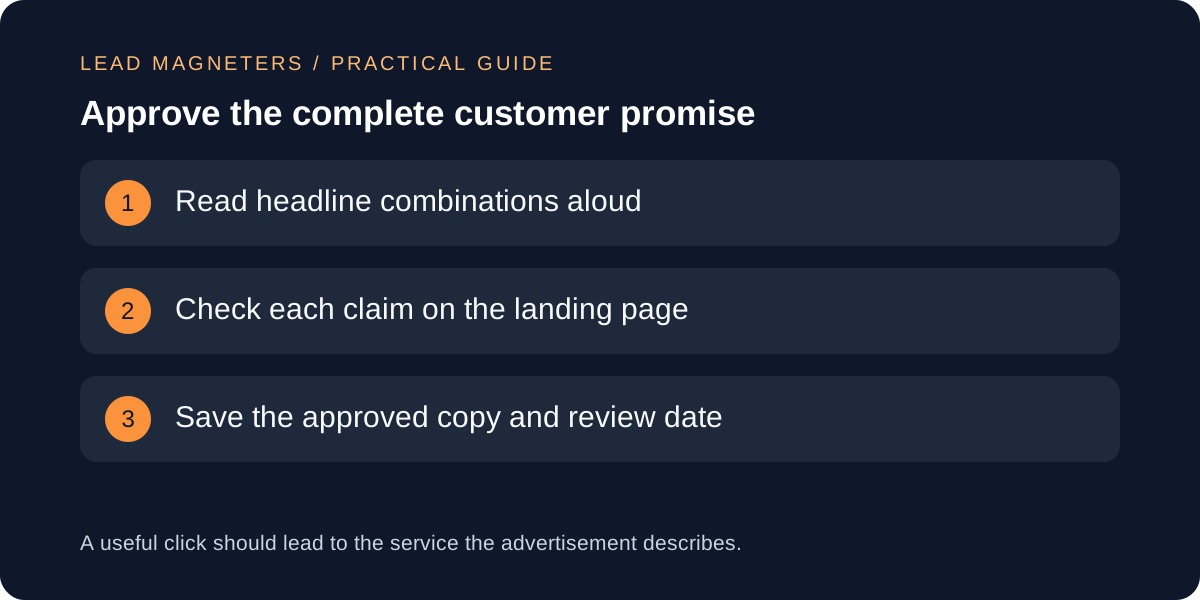
Match the destination to the promise
Open the exact final URL associated with the advertisement. A generic homepage may not explain the particular service or next step promised in the copy. Check the heading, introduction, scope, contact action and any relevant conditions. The customer should not have to search several pages to discover whether the advertised service exists. If the page needs work, make that dependency visible in the launch checklist. Publishing the advertisement first can create enquiries based on a promise the website is not yet ready to support.
For international campaigns, review language and delivery context together. An English advertisement should lead to an appropriate English experience, including the form and follow-up expectations. A reference to Istanbul should accurately describe location or service coverage rather than imply a branch elsewhere. Ask a colleague to read the advertisement and explain what they expect after clicking, then compare that expectation with the destination. Record mismatches in their own words. This simple exercise can reveal ambiguous copy that looks acceptable when reviewed only by the person who wrote the page.
Approve the entered version rather than the document alone
Keep the approved copy in a versioned sheet or document with the final URL and launch owner. Once it is entered into the advertising platform, compare the saved assets with that source. Copying, translating or editing to fit a field can introduce changes after approval. Review optional text customisation or automated asset settings that may affect what appears, using the controls available in the account. The reviewer needs to understand whether the visible advertisement may include wording beyond the manually approved set.
Save the launch date and any unresolved limitations. If several people can edit the campaign, agree on which changes require another review, such as a new service claim or destination. Routine punctuation corrections should not need a lengthy approval chain, but a promised price or delivery time deserves a scope check. Use account previews as one quality check, then monitor the saved configuration and available reporting after launch. A successful save confirms that the platform accepted the input; it does not establish that every customer will see the exact example shown during preparation.
Evaluate useful enquiries and maintain the copy
Review the advertisement alongside landing-page behaviour and sales feedback. A higher click-through rate can coexist with enquiries that misunderstand the offer. Ask whether visitors are requesting the advertised service, whether the team can fulfil their needs and whether the next step was clear. Do not attribute every change in results to wording when budgets, targeting, demand or the landing page also changed. Keep a short explanation of the hypothesis behind each material revision so the next review has a question to investigate.
Retire claims when the service changes and update the destination at the same time. For a campaign consultation, bring the claim sheet, current assets, final URLs and an anonymised summary of common enquiry misunderstandings. These materials make the discussion concrete. The objective is an advertisement that introduces a real service accurately, works across plausible combinations and prepares the right customer for a useful conversation. A repeatable copy review gives the team a way to improve that promise without relying on exaggerated language or treating the platform's quality indicators as proof of business results.