A B2B service case study should help a prospective customer understand whether your work is relevant to their problem. It is not simply a success headline followed by a testimonial. For a US buyer evaluating a remote provider, or a Turkish business selling services internationally, the useful questions are often practical: what was included, what changed, how was the result measured, and what would be different in another situation? This guide explains how to prepare an evidence-led case study without inventing outcomes or turning one project into a universal promise. The workflow and examples below are editorial recommendations, not reports of Lead Magneters client results. Start with the evidence you can actually share, then decide which story that evidence supports.
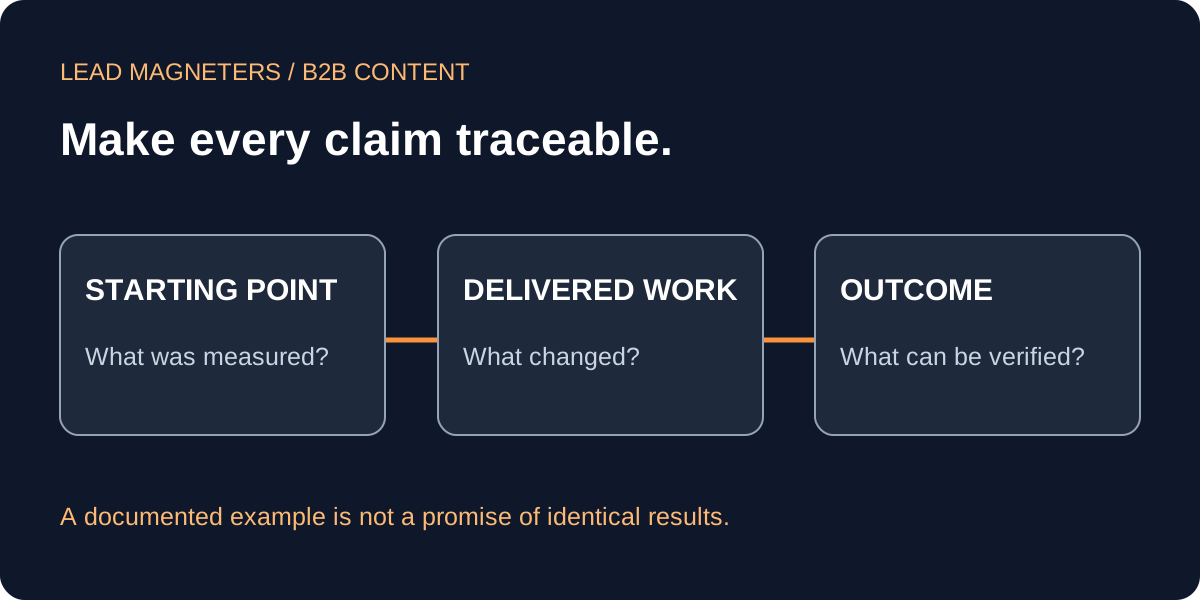
1. Choose a buyer question, not the biggest number
Select a project because it answers a question your next customer is likely to ask. A professional-services firm might need to know how a website enquiry process was improved. A manufacturer might want to understand how technical information was organised for overseas buyers. These are more useful starting points than searching for the largest percentage in a dashboard. Write the question at the top of your brief and keep unrelated achievements out of the narrative.
Describe the customer context without implying that all companies in that sector behave identically. Record the offer, audience, sales cycle and delivery constraints. If the work concerned US enquiries handled by an Istanbul team, explain relevant practical details such as handoff times and language support only when documented. Readers should be able to judge whether the situation resembles theirs. A narrow, well-explained example can be more useful than a broad claim about transforming an entire business.
2. Build a small evidence file before drafting
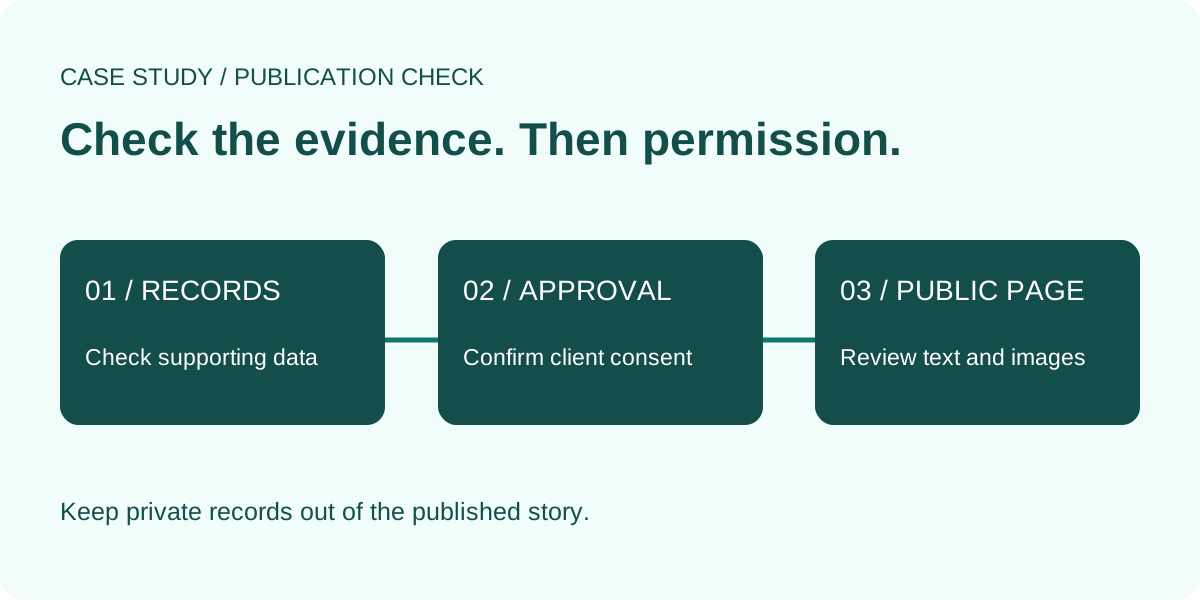
Create a private working table with a row for each proposed claim. Include the claim wording, supporting record, measurement period, responsible reviewer and permission status. A record might be an approved project scope, an implementation checklist or an aggregate report. Do not publish the evidence file itself if it contains personal information or confidential commercial details. Its purpose is to let your team distinguish supported statements from remembered impressions.
Google’s guidance on helpful content asks creators to consider original information, clear sourcing and whether readers can trust the material. That is a useful editorial standard for a case study, not a promise of higher rankings. Apply it by replacing vague claims with an explanation of what was done and how you know. If a proposed statement cannot be checked, remove it, narrow it or label the uncertainty. A confident writing style does not repair missing evidence.
3. Establish a comparable baseline
A result needs a starting point and a measurement window. Specify what you counted before and after the work, and whether the definition stayed the same. Enquiries, qualified enquiries, sales opportunities and completed sales are different measures. A change in form tracking can increase recorded submissions without increasing real demand. If the baseline is incomplete, say so rather than drawing a smooth trend line through missing data.
Consider a hypothetical service business that replaced a general contact form with a form asking about project scope. Fewer submissions might still produce more relevant conversations. The case study should explain the qualification definition and avoid calling every submission a new customer. Also record other changes during the period, such as advertising spend, pricing, staffing or seasonality. These may limit the conclusions you can draw. Do not attribute every improvement to one website change when several factors moved together.
Define a qualified-lead measurement plan →
4. Explain the decisions and delivery scope
Give readers a short sequence of meaningful decisions. Explain the original obstacle, the options considered, the chosen approach and the work actually delivered. For example, a content project may have clarified the offer, reorganised service pages and introduced an enquiry brief. These are deliverables that a buyer can discuss with a provider. Avoid describing ordinary tasks with exaggerated language or implying that an experimental idea became a proven system.
Distinguish your contribution from the client’s contribution. The client may have supplied product expertise, handled sales calls or approved copy, while the agency implemented page structure and tracking. That separation makes the scope easier to understand and prevents your next prospect from assuming that everything was included in one fee. Where screenshots help, show only approved information and explain what the reader should notice. Decorative dashboard images with unreadable numbers are not evidence.
5. Handle quotations and permissions carefully
Request approval for the exact quotation, the person’s displayed name and role, the company name, any logo and the final context in which they appear. Keep a record of that approval. Do not turn interview notes into a direct quotation unless the speaker approves the wording. If the client cannot be identified, agree on a description that does not accidentally reveal them through a combination of unusual project details.
For campaigns aimed at US audiences, the FTC’s endorsement guidance is an important reference: endorsements should be honest and not misleading, and unexpected material connections can require disclosure. Do not assume that a genuine quotation substantiates every surrounding performance claim. This is a general editorial checklist, not legal advice about a particular advertisement. Have qualified counsel review regulated-sector claims or uncertain disclosure obligations before publication; a disclaimer is not a substitute for accurate evidence and appropriate review.
6. Show limitations alongside the outcome
Present the outcome in plain language, with the definition and period close enough that readers do not have to search for qualifications. Where you report a percentage, provide the underlying counts when approved and useful. Describe whether the result came from a controlled comparison or simply an observation before and after implementation. Do not suggest certainty about causation when the available records support only an association.
If you do not have publishable outcome data, a process-focused project note is a valid alternative. Explain the problem, delivered work and verification steps without dressing them up as a financial success story. For example, documenting a working enquiry route is different from claiming increased revenue. A candid account of the information available helps buyers assess your approach. It also makes the page easier to update later if the client approves additional evidence.
7. Connect the case study to a relevant service
Place the case study where it helps a decision. A service page can link to a relevant project example near its explanation of delivery, while the case study can link back to the service it illustrates. Use descriptive link text rather than inserting a long string of target keywords. Do not send readers to an unrelated offer simply because it is the company’s most profitable product.
Give the page one clear next step, such as discussing a comparable problem or requesting a scope conversation. Ask for enough information to make that conversation useful, not a lengthy form copied from an enterprise procurement process. For US prospects considering an overseas team, explain communication arrangements during the consultation rather than inventing a local office. For Gulf buyers, adapt the example only where the actual delivery context differs; swapping country names does not create a new case study.
8. Use a publication and maintenance checklist
Before publishing, assign someone to check claims against the evidence table and someone authorised to confirm the client permissions. Review the headline, captions and social preview as well as the body: misleading shorthand can appear outside the main text. Check the mobile page, image readability, alternative text, contact link and canonical URL. Make sure that downloadable files, if any, do not expose notes or private metadata that were not approved for sharing.
Keep the publication date and a review record. Revisit the page when the offer changes, the client withdraws an approved asset or the evidence needs clarification; do not change dates merely to make the content look new. To begin, bring one project brief and the evidence you are allowed to share to a marketing consultation. Lead Magneters can discuss how that material fits your website and service content. A clear, verifiable story gives a prospective customer a better basis for a conversation than an unsupported success claim.