The first reply to a service enquiry should help the customer move forward with as little confusion as possible. Many businesses spend time acquiring visitors, then answer a carefully written request with a generic message that asks for the same information again. Others send an automatic receipt that looks like a personal assessment even though nobody has reviewed the enquiry. This guide explains how to create a useful first response for a small service team. It covers message structure, proportionate questions, delivery checks and ownership. The examples are illustrative templates to adapt to an actual service, not a script that guarantees a sale or a reason to contact people who did not enquire.
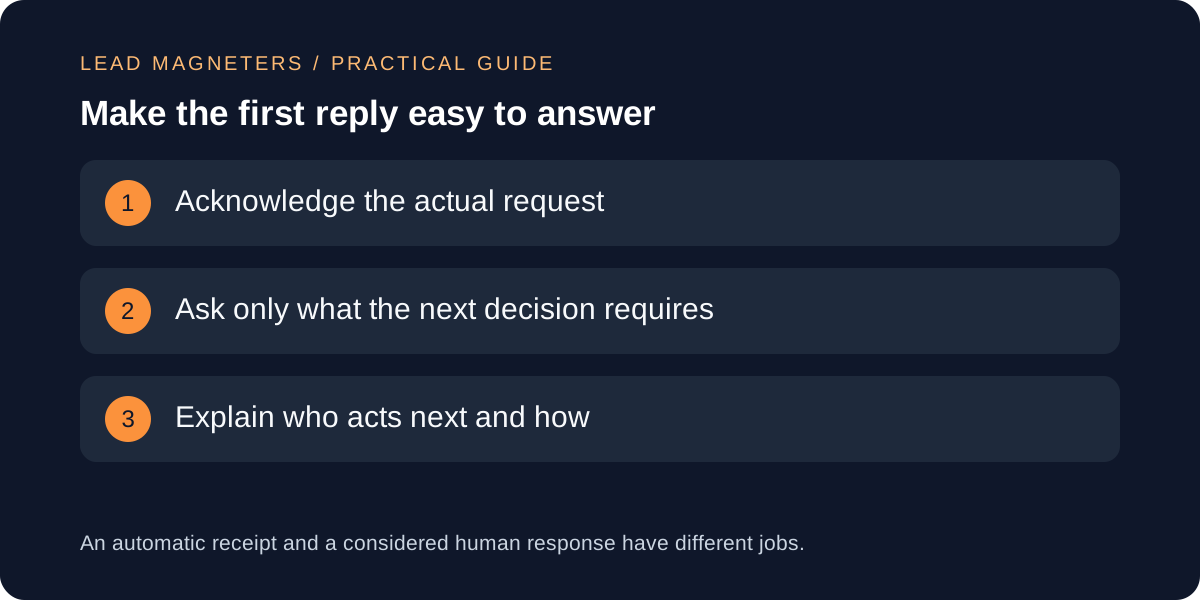
Separate acknowledgement from a considered response
An automatic acknowledgement confirms that the message was received and explains what happens next. A human response interprets the request and helps decide whether the service is suitable. Keep those roles distinct in the wording. If an automated message has not assessed the project, it should not say that the team has reviewed the requirements or can definitely provide the requested solution. A simple receipt can still be useful by naming the business, setting an honest expectation and explaining how to correct an error in the submitted details.
Use a response-time statement only if the team can support it. Describe working hours and any relevant time zone when customers may be contacting you from another country. Avoid creating an urgent expectation that an unstaffed inbox cannot meet. Give the customer a clear route for an existing-project issue if the new-business form is not the right place for support. Keep the acknowledgement concise enough to read quickly on a phone. The message should reassure the sender that their enquiry arrived without pretending that the next stage of work has already happened.
Show that the actual request has been understood
The first considered reply should refer to the customer's stated objective in a short, accurate sentence. For example, a hypothetical reply might begin: Thank you for outlining your website redesign and the need to preserve existing article URLs. That acknowledgement is useful only when it reflects the enquiry. Do not insert an assumed budget, business problem or project deadline that the sender did not provide. If the request is ambiguous, state the part you understood and ask for the missing context rather than manufacturing a confident interpretation.
Check the original submission before using a template. Remove questions the customer has already answered and adapt the next step to the service requested. A website project, an advertising review and an ongoing SEO engagement may require different preparation. Avoid replying with a long list of every service the business sells. The customer has already supplied a starting point; use it to make the conversation more relevant. Keep any internal notes or qualification labels out of the external message. A useful response should read like a conversation with the sender, not an export from a sales worksheet.
Ask only for information needed for the next decision
Choose a small set of questions that determine what the team should do next. For a website discussion, the current URL, the main objective and an important timing constraint may be enough to organise a useful initial call. A detailed technical questionnaire may be appropriate later, but sending it immediately can burden someone who is still checking whether the service fits. Explain why a question matters when the connection is not obvious. This helps the customer provide a useful answer rather than guessing the format you expect.
Do not request account passwords or sensitive business records by ordinary enquiry email. If access or documents become necessary, use the company's approved process at the appropriate stage. Offer an alternative when a customer cannot provide a requested item, such as describing a site that has not launched yet. Distinguish required information from optional background. A response with three focused questions is often easier to act on than a broad request to send all details. The exact number should follow the decision, however, rather than becoming another rigid template rule that ignores the enquiry's complexity.
Clarify the criteria for a useful lead →
Explain the next action and who owns it
End the reply with one primary action. It might be answering the questions, choosing an available meeting time or reviewing a relevant service page. Avoid asking the customer to book a call, complete a questionnaire and upload documents simultaneously unless those steps are genuinely necessary and clearly ordered. Say what the team will do after the customer responds. For example, after receiving the current website and objective, the responsible person can confirm the appropriate discussion and preparation. Do not imply that sending information commits the business to a price or delivery schedule.
Use a monitored reply address and make the responsible person's role clear. If several staff members receive the initial enquiry, agree internally who sends the response so the customer does not receive competing messages. When handing the conversation to a specialist, include enough context that the sender does not have to repeat the request. Preserve the original thread where practical and explain the handoff briefly. This customer-facing clarity depends on an internal ownership rule, but the customer should not need to understand your CRM structure in order to receive a helpful answer.
Verify delivery and the ability to reply
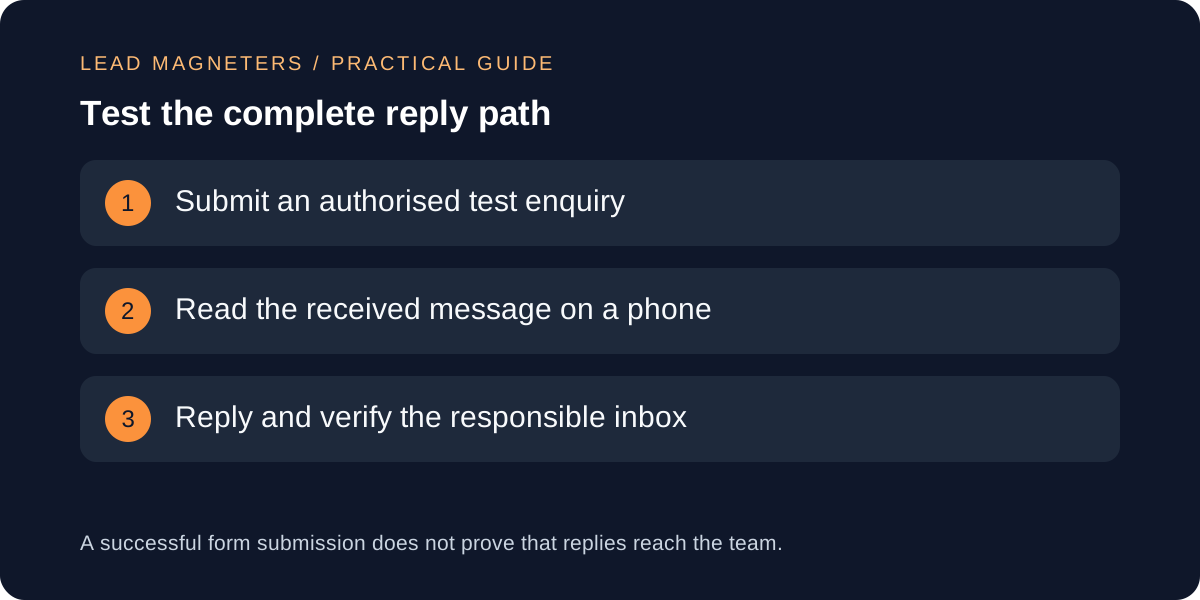
Test the complete journey with an authorised dummy enquiry. Confirm that the acknowledgement reaches the intended test address, that the sender identity is recognisable and that a reply returns to the correct monitored inbox. Check the message on a small screen and inspect links and any formatting that might be difficult to read. A successful form submission only proves one part of the process. It does not demonstrate that the external message was delivered or that the team will see the customer's response.
Gmail publishes sender requirements covering authentication and other delivery practices, with additional requirements for higher-volume sending. Have the person responsible for email configuration check the rules that apply to your sending setup and current volume. Do not assume that a well-written message compensates for an authentication problem, or that technical configuration guarantees inbox placement. Keep enquiry responses separate from unrelated promotional sequences unless the appropriate permission and process exist. Investigate delivery failures using the available mail logs and test results, while avoiding unnecessary exposure of customer message contents in broad team notifications.
Maintain a small template library with human review
Create a few templates around real situations: a clear service fit, an incomplete request, a request outside the offer and a handoff to a specialist. Each template should contain editable prompts rather than invented customer details. An out-of-scope response can be courteous and specific without promising a referral or alternative the team has not checked. Review the templates when service scope, staffing or working hours change. Remove outdated meeting links and unsupported response-time claims before they become recurring customer misunderstandings.
Sample recent conversations periodically and ask whether the customer understood the next step, whether the requested information was proportionate and whether ownership remained clear. Use aggregate observations to improve the process rather than turning every message into a rigid score. For a consultation, bring anonymised examples, the enquiry sources and the current reply workflow. The aim is a response that acknowledges the real request, gives the customer a manageable action and connects them with a responsible person. Better follow-up begins with that clarity before the team adds more automated messages.