A service business content brief turns a proposed article into a clear promise to the reader. It explains who needs the answer, what decision they are trying to make and which evidence the writer can responsibly use. Without that preparation, a growing blog can publish many variations of the same broad topic while leaving practical buyer questions unanswered. The problem becomes more visible when several articles are produced every day. A brief should make that output easier to review, not simply longer. This guide offers a working approach for companies selling services in Turkey and international markets, using examples that are illustrative rather than claims about client results or keyword demand.
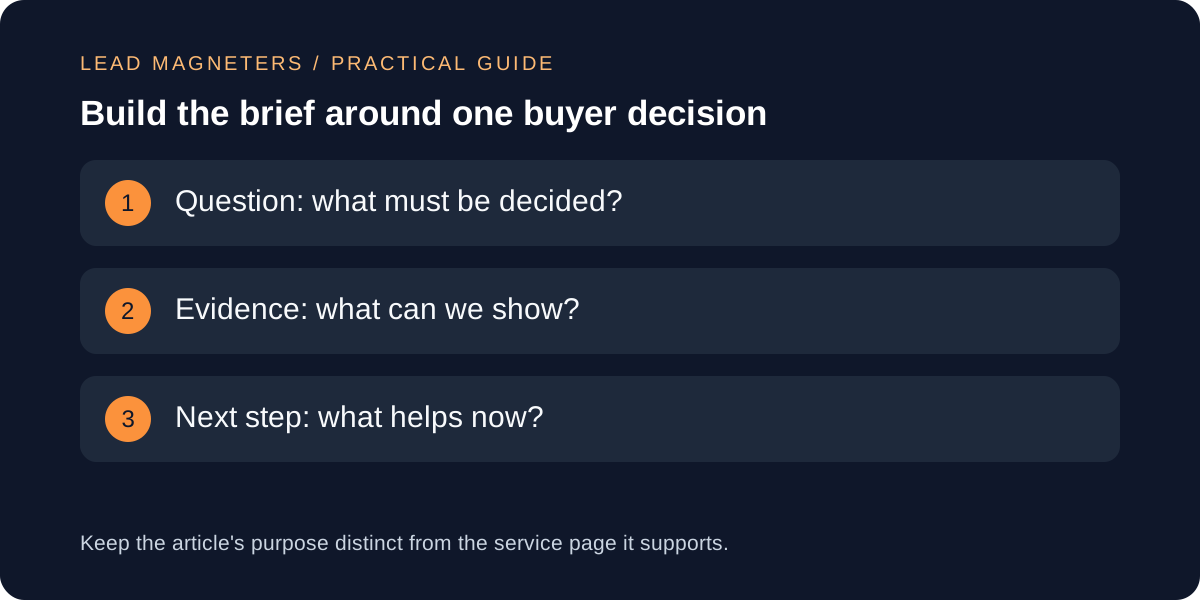
Write the buyer's decision in one sentence
Begin with a situation rather than a headline formula. For example: an owner replacing a slow website needs to decide what to include in a development brief before requesting proposals. That sentence identifies a reader, a problem and a useful outcome. It is more actionable than a topic label such as website development tips. Ask what the reader should be able to compare, prepare or check after finishing the article, and use that answer to define the scope.
Separate a buying question from a direct service request. A service page can explain the work your company offers, while an article can help the buyer prepare inputs or evaluate a specific tradeoff. Review the existing site before approving a new brief. If another article already answers the same question for the same audience, update it or choose a genuinely different decision. A new title, year or city name does not automatically create a new purpose.
Use research to refine the question, not invent certainty
Collect the language customers actually use from approved sales notes, enquiries and available search data. Then review current search results for the proposed question and inspect primary sources relevant to the answer. Record the date and what the research changed in the brief. You may discover that readers need a checklist, a comparison or an explanation of prerequisites rather than another broad introduction. Treat this as editorial evidence, not permission to copy another publisher's structure.
Choose a main search phrase and a few natural supporting terms after the question is clear. Do not invent search volume, competition scores or ranking forecasts when no reliable data is available. A useful brief can explicitly say that a term is a hypothesis supported by customer questions and current search observations. For international topics, state the intended language and market. A Turkish buyer researching local delivery and an overseas buyer evaluating an Istanbul supplier may need different examples even when the main service is identical.
Specify the evidence before asking for persuasive copy
List the facts the writer can verify, the sources supporting them and the claims that require owner approval. Product capabilities should come from current official documentation. Company experience should come from approved records. If a case study is unavailable, use a clearly labelled hypothetical example that explains the decision without implying a real client result. The writer should never have to invent proof to make the article sound authoritative.
Google's helpful-content guidance encourages original value, reliable sourcing and a clear understanding of the audience. It does not prescribe a preferred word count. Treat an internal length requirement as an editorial constraint, then earn that space with explanations, examples and practical checks. Include a source beside the claim it supports, and distinguish an official platform rule from your own recommended workflow. A brief should also identify what remains uncertain, especially when a feature varies by account or the business has not committed to a particular service.
Develop clear and useful writing →
Build an outline that follows the reader's work
Arrange the sections in the order the reader will use them. A preparation guide might start with the decision, continue with required inputs, explain common mistakes and finish with a review checklist. Give each section a job and an example. If two headings would contain the same advice, combine them before drafting. This prevents repetition from being disguised as depth and makes a long article easier to scan on a phone.
Add visual requirements only where they improve understanding. A simple diagram can show a handoff between marketing and sales; a comparison table can make scope differences easier to evaluate. Specify what the visual should teach, its text alternative and the rights needed to publish it. Avoid requesting a decorative stock image for every heading. Keep the page lightweight and ensure that the key explanation remains in the article text, so readers can understand it without deciphering an illustration.
Plan internal links around the next useful question
Choose the article's main category and one appropriate subcategory before publication. The breadcrumb and URL should reflect that position, while contextual links connect readers to related questions in other sections. In the brief, write why each proposed link belongs. For example, a guide about preparing a marketing report can link to a measurement plan because the reader needs consistent definitions before comparing results. That explanation is more useful than a quota requiring several links anywhere in the text.
Connect the article to the relevant service page without turning every paragraph into a sales pitch. The call to action should follow naturally from the work the reader has just completed: bring a brief to a consultation, review a service scope or discuss a technical issue. Use descriptive link text and verify the destination after deployment. Also identify an existing page that should link to the new article, so the relationship works in both directions and the new resource can be discovered through normal browsing.
Turn the brief into a reviewable publishing record
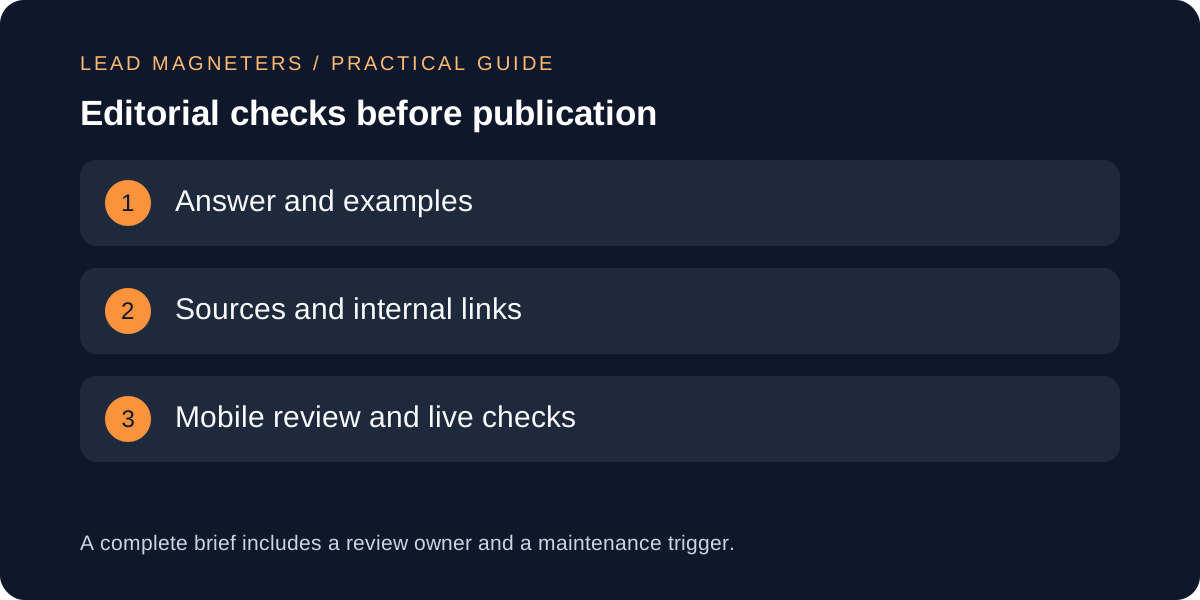
Finish with acceptance criteria: the opening answers the question, examples are labelled accurately, sources work, internal links reach the intended pages and the final action matches an existing service. Include the person responsible for factual review and a trigger for future updates, such as a platform change or a revised offer. A short review record is more valuable than a vague label saying SEO optimised, because another editor can see what was checked and what would make the article stale.
For a team publishing frequently, keep a daily inventory of planned, drafted and verified live articles. Assign one distinct buyer question to each and check overlap before writing. If a piece lacks evidence or adds nothing beyond an existing guide, hold it for improvement rather than filling a slot with repetition. To prepare for a marketing consultation, bring three real customer questions, the service pages they relate to and examples of current content that is hard to maintain. That provides a practical starting point for a publishing plan built around useful decisions and sustainable production.