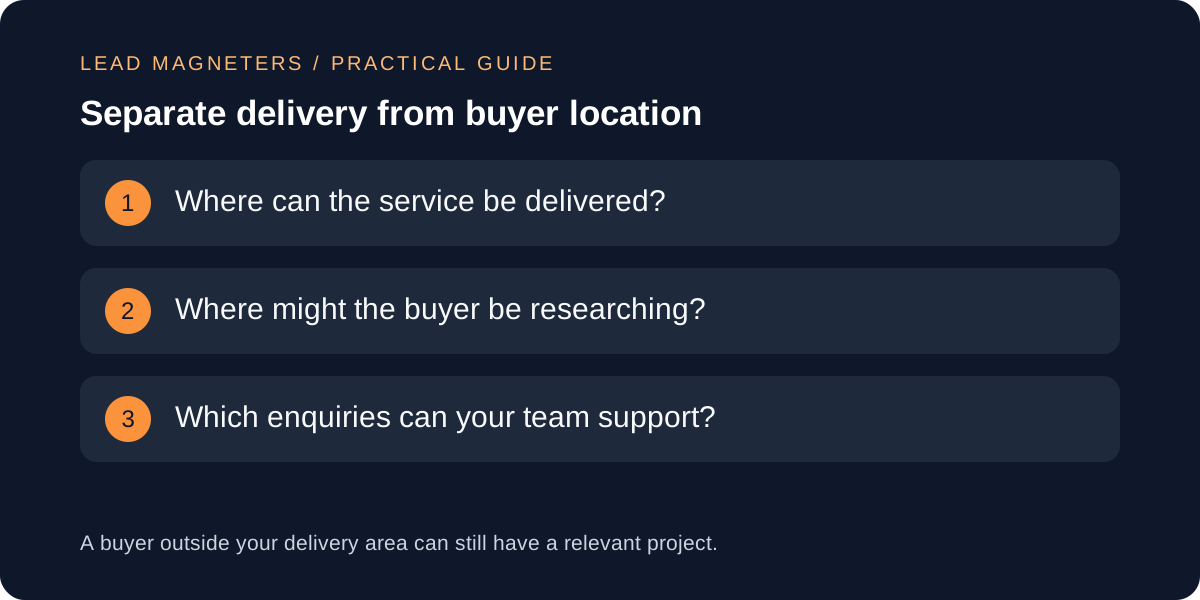
Google Ads location targeting should reflect how your business delivers services and how customers buy them. Those are sometimes different maps. A repair company may need customers near its technicians, while a development agency in Istanbul may serve an organisation based in the Gulf or the United States. Choosing a location setting without discussing that distinction can exclude useful buyers or attract enquiries the team cannot handle. This guide offers a practical decision process for Search campaigns. It focuses on coverage, customer context and a repeatable review rather than assuming one targeting option suits every service. The examples are hypothetical planning scenarios, not reported campaign results or promises of lower advertising costs.
Write a service coverage statement first
Start with an operational statement that a salesperson and a campaign manager can both understand. Describe the service, the places where delivery is possible, any requirement for an on-site visit, supported languages and the hours when enquiries receive attention. A local installation business might cover a specific set of districts because travel time affects scheduling. A remote consulting business might accept projects across several countries but only in languages its staff can support. Neither boundary can be inferred reliably from the office address alone.
Create three columns in a simple worksheet: normally supported, needs review and unavailable. Put uncertain cases in the middle instead of forcing them into an immediate yes or no. For example, a project outside the usual area might be viable with a different scope or delivery arrangement, but the advertisement should not promise that arrangement before it is approved. Ask the person responsible for fulfilment to review the worksheet. This gives future targeting changes an explicit business reason and prevents campaign settings from quietly expanding the company's advertised capabilities.
Distinguish physical presence from geographic interest
Google documents options that consider people likely to be in or regularly in a location, and broader options that also consider interest in that location. Location estimates use several signals and are not perfectly accurate. Check the options available for the campaign type you are editing rather than assuming every advertising product exposes identical controls. The important question is whether someone researching your service from elsewhere can be a suitable customer, not whether one setting sounds more precise in isolation.
Consider two hypothetical enquiries. Someone currently abroad may be arranging work for an office in Istanbul, while someone currently in Istanbul may request delivery to an unsupported region. Their immediate location does not resolve whether either project is eligible. For a tightly local service, a presence-focused approach may align with the delivery rule. For services purchased before travel or managed internationally, excluding interest-based demand could remove relevant research. Record the expected buyer journey and the evidence that would make you reconsider the choice. Treat that explanation as part of the campaign brief, not an undocumented preference.
Make the advertisement and page explain coverage
Geographic settings cannot compensate for a vague offer. The advertisement and its landing page should describe the service area in language a prospective customer can understand. If an on-site visit is limited to named locations, explain that near the enquiry action. If remote delivery is available, describe what is delivered remotely and what information the team needs to assess the project. Avoid scattering city names through a page merely to make it look locally relevant. A visitor needs to know whether the business can help with their actual situation.
Use a small set of enquiry questions to resolve the remaining uncertainty. Project location and preferred contact language may be more useful than asking where someone happens to be browsing. Explain why a field is needed and keep the form proportionate to the decision. For international audiences, review working hours and the wording of any response-time expectation. A Turkish office serving overseas customers should not imply continuous support unless that service exists. Test the page with a colleague who has not seen the campaign brief and ask them to describe who qualifies for the offer.
Review your service landing page →
Keep exclusions and campaign boundaries understandable
List the locations that are intentionally excluded and explain the reason for each. Some exclusions reflect delivery limits, while others may reflect a temporary operational decision. Give temporary decisions a review date. A long list copied from another account can contain assumptions that no longer apply to your business. Before editing, save a record of the existing configuration and identify who can approve changes. This makes it easier to investigate an unexpected shift without relying on memory or a screenshot with no context.
Separate campaigns only when the distinction supports a meaningful difference in budget, offer, language, delivery or evaluation. Dividing every small area into its own campaign can make a modest account harder to understand. Conversely, combining markets with very different service requirements can conceal where unsuitable enquiries originate. Choose a structure the team can explain and maintain. When several campaigns cover related areas, review their purpose together so that the budget owner understands the overlap. Keep geographic decisions separate from negative keyword decisions: a phrase and a location answer different questions about the customer.
Compare reported geography with actual enquiry quality
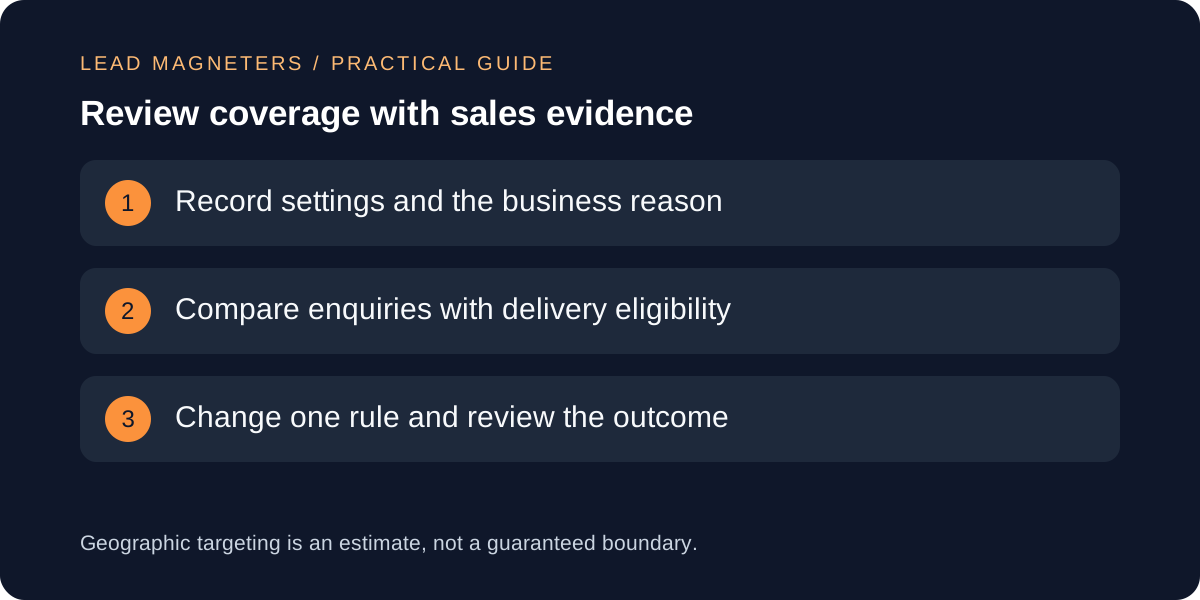
Review the geographic reports available in the account, but read each report's definition before interpreting a location label. Pair the advertising view with a small, consistently classified sample of enquiries. Record whether the requested delivery location was supported, whether the requested service matched the offer and whether the team could communicate effectively. Keep unnecessary personal details out of the campaign review. The objective is to understand mismatches between acquisition and fulfilment, not to create a detailed profile of every person who contacted the business.
Do not equate an overseas enquiry with wasted spend or a local enquiry with a qualified opportunity. Ask what the customer needed and why the enquiry progressed or stopped. A weak landing page, delayed reply or unavailable service can all produce poor outcomes despite a reasonable geographic choice. If several factors changed together, avoid attributing the result to location settings alone. Pick a review period that respects the buying cycle and available volume. With limited evidence, document uncertainty and investigate the clearest mismatches before making broad exclusions that may be difficult to evaluate.
Use a controlled review before expanding
Before a change, write down the current rule, proposed rule, reason, expected effect and date for review. Include a rollback decision: what evidence would suggest that the change is harming useful demand or creating work the team cannot fulfil? Keep the change narrow enough to interpret. After implementation, verify the saved campaign settings and the destination page, then check that the enquiry process still works. A targeting adjustment is not complete simply because the platform accepted the edit.
For a consultation, bring the coverage worksheet, campaign settings, landing pages and an anonymised summary of relevant and unsuitable enquiries. These materials make it possible to discuss the business trade-off rather than debating a setting without context. Revisit the plan when services, staffing or supported markets change. Expansion should follow real delivery capacity and a clear customer journey. The useful outcome is a geographic advertising plan that your marketing and sales teams can defend together, with visible assumptions and a way to learn from the next set of enquiries.