Enhanced conversions for leads can help a service business connect an advertising interaction with a later outcome, such as a qualified enquiry or completed sale. The useful result is not simply another tag on a form. It is a dependable path from the website to the CRM and back to Google Ads, with a clear definition of the event, appropriate customer-data handling and enough evidence to detect missing or duplicate records. Google changed parts of this workflow in 2026, including a unified enhanced-conversions setting and a greater role for Data Manager. This enhanced conversions for leads checklist helps marketing, sales and development teams agree on the business stages, data fields, consent responsibilities, import method, validation plan and bidding transition before they treat the setup as complete.
Start with the business outcome, not the connector
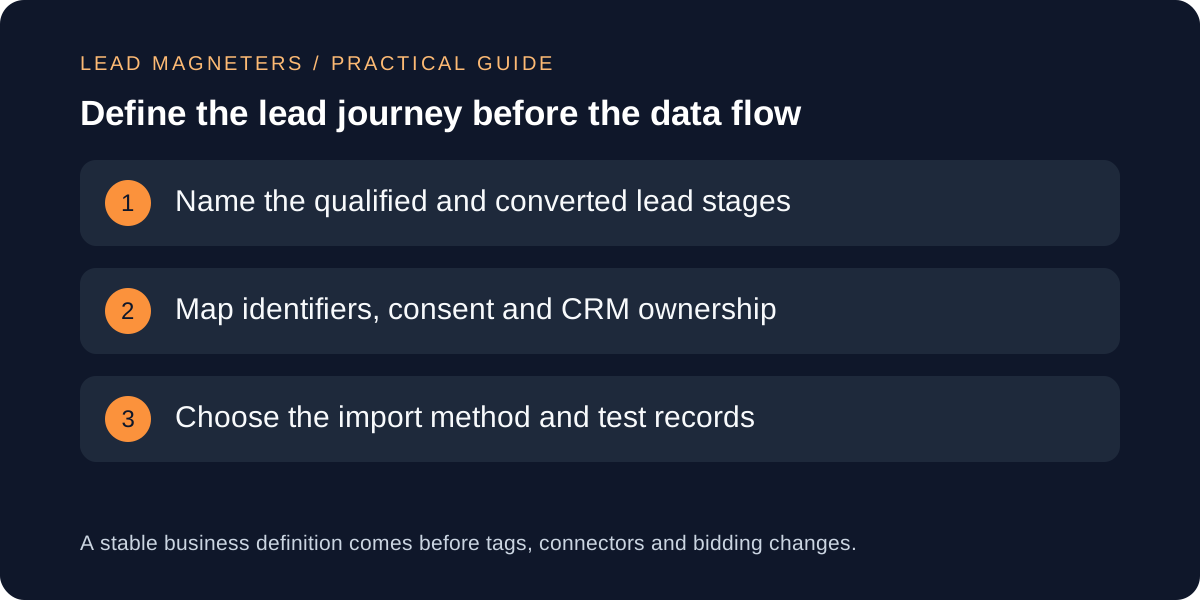
Write down the lead stages that matter before selecting an integration. A form submission may show that a person contacted the business, but it does not show whether the request fits the service, geography, timing or budget. Decide what qualifies a lead and what counts as a converted lead in language that sales and marketing can apply consistently. For example, a qualified enquiry might require a confirmed service need and a market the team can serve. A converted lead might require an agreed commercial outcome. These are operating definitions, not labels chosen only because they appear in an advertising interface.
Assign an owner to each stage and record where the decision is stored. If qualification happens in a CRM, identify the field and the person or rule that changes it. If it happens in a spreadsheet, document the risks and the process for maintaining stable identifiers. Avoid creating several nearly identical conversion actions for every internal status. Google recommends qualified-lead or converted-lead goals for this type of setup, but the names remain useful only when the underlying business rules are clear. A short measurement brief should explain the event, owner, source system, expected delay and correction process.
Map identifiers and consent before implementation
List the information available when the enquiry is created and when its status changes later. Depending on the approved implementation, the matching inputs may include a Google click identifier and user-provided data such as an email address or telephone number. Google describes hashing and formatting requirements for particular upload methods and recommends continuing to send available click identifiers. Do not assume that hashing removes every privacy responsibility. The organisation still needs a lawful, transparent process for collecting, using, retaining and transmitting the underlying information in each market where it operates.
Bring the privacy owner into the plan before a developer exposes new fields to a tag, connector or export. Record the consent state where the implementation needs it, restrict access to the smallest practical group and avoid copying customer lists into informal working files. Decide how corrections and deletion requests flow through connected systems. Turkey, Gulf markets and the United States can involve different legal and contractual expectations, so obtain appropriate advice for the actual operation. This article provides an implementation checklist, not a legal conclusion. The public notice, consent experience and Google Ads customer-data requirements should be reviewed together.
Choose a data route that the team can maintain
Select the import route after documenting the systems and available skills. Google Ads Data Manager can connect supported first-party sources, while some teams use an approved third-party integration or an API workflow. Google states that, from April 2026, enhanced conversions for web and leads use a unified setting that accepts user-provided data from website tags, Data Manager and API connections. It also states that certain legacy Google Ads API upload access changed from 15 June 2026. Review the current official documentation for the account and method rather than following an older screenshot-based tutorial.
The most sophisticated route is not automatically the most reliable. A small service team may benefit from a supported connector with visible field mapping and an owner who can monitor failures. A custom integration may be justified when the CRM stages, correction rules or volume require it, but it also needs authentication, logging, retries and maintenance. Document the source, destination, frequency, time zone and failure alert. Include a stable transaction or order identifier when appropriate to help control duplicates. Keep credentials out of shared briefs and use the organisation's approved secret-management process.
Connect the workflow to clear lead ownership →
Build a small test set with expected results
Create test cases that represent the real journey without using unnecessary personal information. Include an eligible lead that becomes qualified, an enquiry that remains unqualified, a duplicate update and a corrected status. Record the expected website event, CRM record, import event name, timestamp, value if used and final diagnostic state. Test the time-zone conversion explicitly, especially when teams serve Istanbul, Gulf and US markets. A conversion time shifted to the wrong date can make campaign comparisons misleading even when the upload succeeds technically.
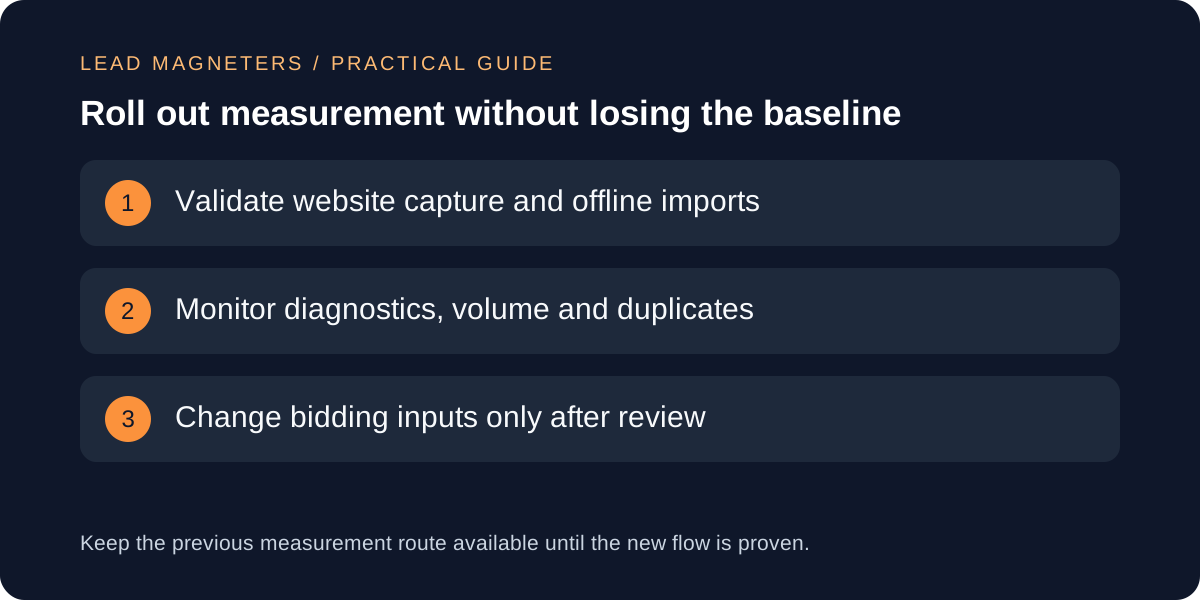
Check the website capture and the offline update as separate stages. Confirm that the form succeeds for a visitor, that the required identifier reaches the correct CRM record and that the later status change produces one intended event. Then inspect the platform diagnostics for formatting, matching and import problems. Google notes that diagnostics can reveal missing or incorrectly formatted user-provided data and implementation issues. A successful connector run is therefore only one piece of evidence. Save a concise test record that another team member can repeat after a form, CRM or consent change.
Protect the baseline during rollout
Do not switch campaign optimisation to a new signal immediately after the first successful upload. Google advises teams replacing an existing offline conversion import to validate the new action and allow data to accumulate before changing which action is primary. Its current guidance refers to the longer of one to two conversion cycles or four weeks for that migration scenario. The appropriate review window still depends on the sales cycle and volume. A company with a long B2B evaluation process may need more patience than a high-volume enquiry operation.
During the overlap, compare counts by date, source and CRM stage. Investigate gaps, sudden spikes and repeated transaction identifiers. Watch for a form redesign, cookie change, CRM field edit or connector failure that affects the data route. Keep campaign managers informed about what has changed and when. If observed conversion volume increases, do not automatically claim that the business generated more customers; the measurement may simply capture more previously unobserved outcomes. Separate measurement coverage from commercial performance when reporting the rollout.
Create an operating checklist for ongoing accuracy
Turn the implementation document into a monthly operating check. Review diagnostics, last successful import, event volume, match-related warnings, duplicate controls and changes to form or CRM fields. Confirm that the qualified and converted lead definitions still reflect what the business can serve. Revisit values only when finance and sales can support them with a consistent method. Keep a change log that states who modified the setup, why, which tests passed and whether bidding inputs were affected. This helps distinguish an intentional improvement from an unexplained reporting break.
A focused consultation should begin with the current conversion actions, website form, CRM stage map, consent approach and a sample of anonymised expected events. From there, the team can identify the smallest useful implementation, assign technical and operational ownership and define evidence for launch. Enhanced conversions for leads can strengthen measurement when the data journey is maintained carefully. It cannot repair inconsistent qualification, missing follow-up or unclear service eligibility by itself. Treat it as one connected part of lead management, advertising and reporting rather than as a switch that guarantees better campaign results.