Meta descriptions for service pages are easiest to write when the page already has a clear purpose. A description should help a potential customer recognise the offer and decide whether the page is worth opening. It should not try to compress every keyword, location and sales promise into one sentence. For an agency serving Turkey and international markets, the useful detail may be the service scope, the intended customer or the next step in discussing a project. This guide explains a practical editorial review you can apply to a small service website. It treats the description as part of a coherent customer journey rather than a shortcut to rankings or a guaranteed display format.
Start with the page's specific buyer question
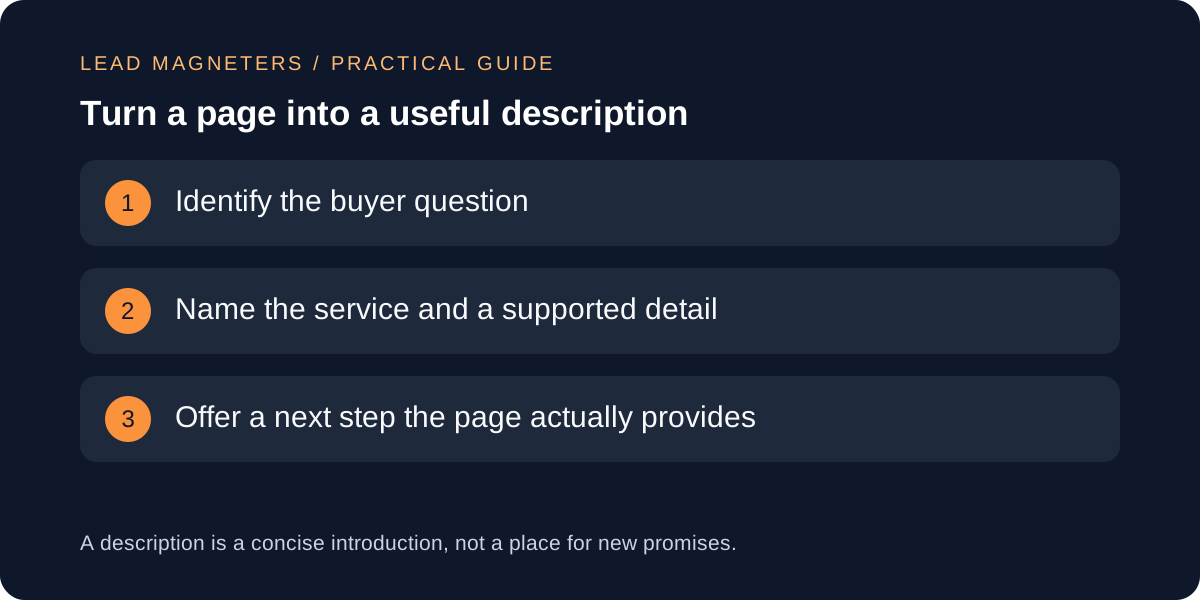
Open the page and describe the decision it helps someone make. A website development page may help a buyer understand delivery scope, while an SEO service page may explain an ongoing management process. A comparison article answers a different question and should not borrow the same description simply because it mentions both services. Write the page's purpose in plain language before drafting metadata. If two pages have indistinguishable purposes, investigate the content overlap instead of trying to conceal it with different descriptions.
Create a small review sheet with the final URL, page type, primary audience, buyer question and current description. Include only pages you can inspect directly. For each commercial page, identify the action available after reading: requesting a consultation, reviewing a service scope or preparing project requirements. This prevents generic endings that promise a quotation, download or free audit the page does not actually provide. The sheet also gives a future editor enough context to revise the description without having to reconstruct the original marketing discussion from scratch.
Select concrete details the page can support
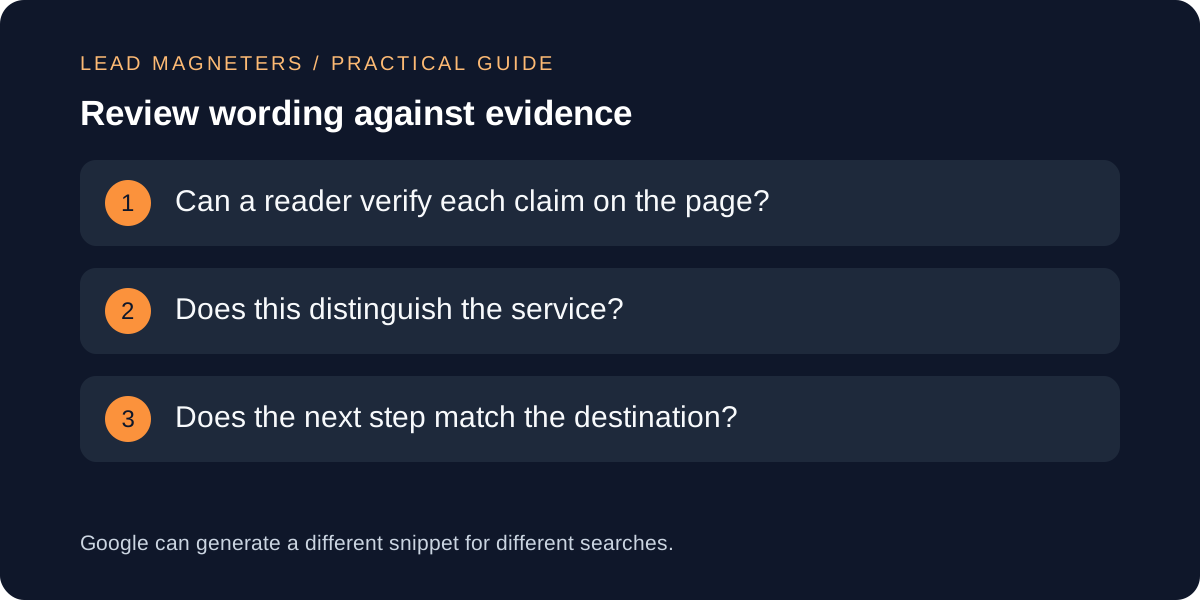
Choose one or two details that distinguish the offer and are already explained on the page. These might describe the work included, the type of project or how the engagement begins. Avoid unsupported superlatives, guaranteed outcomes and invented delivery times. If a page says that scope is agreed after consultation, its description should not imply a fixed package with immediate delivery. A precise description sets an expectation that the page can fulfil, which makes the transition from search to website easier to understand.
For example, an illustrative draft could say: Discuss a service website project with clear scope, mobile usability and a practical launch plan. That wording is suitable only if the page actually discusses those elements. Another business may need a different emphasis, such as an existing-site migration or a specific integration. Do not copy the example unchanged across unrelated offers. Highlight the fact that matters to the reader's decision, then remove any adjective that adds enthusiasm without adding information. Keep a note of the page section supporting each material claim.
Write a concise description without chasing a magic length
Google explains that search snippets can be generated from page content and may use the meta description when it is a useful summary. The displayed snippet can vary by query and available space. There is no fixed description length that guarantees the complete text will appear. Write an informative opening so that the essential service meaning survives if the display is shortened. Treat any preview tool as an approximation of appearance rather than a promise about what every searcher will see.
A practical editing sequence is to name the service, add the most useful supported detail and finish with a relevant next step if there is room. Read the result aloud. Remove repeated brand names, lists of near-identical keywords and phrases such as welcome to our website. Compare the description with the title: together they should add context, not repeat the same words twice. Avoid sacrificing readability to meet an arbitrary character target. The description should remain understandable when viewed alone in a spreadsheet or shared with a colleague for review.
Connect page summaries to your SEO strategy →
Handle language and location deliberately
Write descriptions in the language of their destination pages. A Turkish service page and an English service page may address similar needs, but their wording should be reviewed by someone who understands each audience. A literal translation can sound unnatural or imply a service arrangement that the localised page does not explain. Confirm the language of the enquiry process as well as the article or service copy. Readers should not be invited into a conversation that the business cannot support.
Include a location when it helps establish genuine relevance. A company based in Istanbul may also serve remote customers, but the description should not imply offices or teams in every target market. Distinguish a business location from a delivery area. For international buyers, a useful detail about remote collaboration may be more informative than a string of country names. Keep separate descriptions for genuinely different localised pages, and review whether each destination provides enough context to justify its promise. Metadata should reflect the website's actual structure and service capability.
Verify the published page, then interpret results carefully
After editing, inspect the public page's HTML to confirm the intended description is present and belongs to the correct URL. Check the page title, canonical destination and visible introduction at the same time. A content management field can be saved while a template, deployment or caching issue leaves the published output unchanged. Review a representative page from each template when making shared changes. Keep a dated record of the previous and new wording so that the team can understand what changed later.
When reviewing search performance, compare similar query groups and consider changes in position, device mix, seasonality and search demand. A higher or lower click-through rate after an edit does not by itself prove that the description caused the movement. Google may show a different snippet, and the audience may have changed. Use the data to generate questions rather than a certainty the evidence cannot support. If the wording attracts enquiries that misunderstand the offer, revisit both the metadata and the page introduction with sales feedback in view.
Maintain descriptions when the service changes
Add description review to meaningful service updates. If the offer, delivery model, language coverage or primary action changes, check whether the metadata still introduces the page accurately. Avoid refreshing every description merely to make the website appear active. A stable, accurate summary does not need a new date or a new adjective each month. Prioritise pages with unclear positioning, duplicated descriptions or claims that no longer match the visible content. This is an editorial maintenance task that can be handled without adding visitor-side scripts.
Bring a short list of important URLs to an SEO review, along with the buyer question and evidence behind each description. Discuss whether the page itself needs improvement before spending time polishing a summary of weak content. Keep the final wording and rationale in the review sheet so that future updates remain consistent. Good metadata work connects the search result, the page and the enquiry action into one understandable promise. The aim is to help the right reader choose a relevant next step and find what the introduction led them to expect.