A GA4 lead measurement plan should explain what your team means by a lead before anyone adds another tracking tag. A visitor pressing a contact button, a successfully received enquiry and a qualified sales opportunity are different events. When they are grouped together, a marketing report can look healthy while the sales team receives little useful work. This is especially relevant for service businesses selling across Turkey, the United States and the Gulf, where language, delivery scope and response timing can affect qualification. The goal of this guide is a clear implementation brief: business definitions, event ownership, test cases and a review process. It is not a claim that installing analytics automatically improves lead quality.
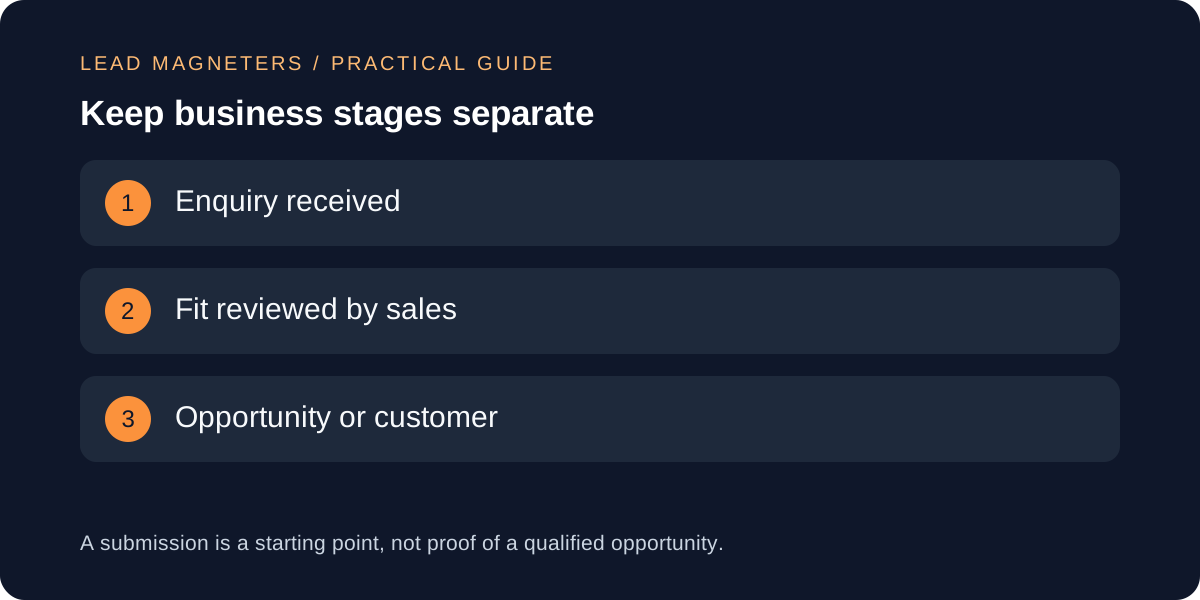
Agree on the stages before choosing event names
Ask marketing and sales to describe an enquiry that is worth following up. Write down the minimum criteria: a relevant service need, a supported market, usable contact details and enough context for the next conversation. Keep those criteria specific enough that two team members would usually classify the same enquiry in the same way. Avoid treating a missing budget field as an automatic rejection if your sales process normally establishes budget later.
Create separate definitions for received, qualified, disqualified and converted leads. A received enquiry proves that information reached your business; qualification adds a judgement about fit. A converted lead should correspond to your agreed customer milestone, not merely to a salesperson opening the record. Record who can change each stage and how corrections are handled. This small vocabulary prevents reports from changing meaning when someone new joins the team or an agency starts managing the account.
Map business stages to a restrained event plan
Google Analytics documents recommended lead-generation events including generate_lead, qualify_lead and close_convert_lead. These events need implementation and context; naming an event does not connect your website to your sales records automatically. Use the official event reference to agree the appropriate trigger and parameters with your developer. Keep your business definitions beside that technical mapping so that future changes can be reviewed against the original purpose.
A useful event worksheet has columns for the business action, technical trigger, system of origin, owner and test expectation. For an enquiry form, the success event should follow the accepted submission rather than fire on every click of the submit button. For a qualification update, identify the system where the sales decision happens and whether a supported integration exists. If it does not, begin with a separate reconciled sales report instead of pretending that the analytics dashboard already contains the full funnel.
Keep duplicate signals from becoming duplicate success
Inspect the current tracking setup before adding anything. A site may already record an event through its application code, a tag manager or a form integration. Adding a second implementation can turn one real action into two reported successes. Document which component owns each event and remove redundant triggers only after checking their other uses. The point is a traceable implementation, not the highest possible number of events in a debugging screen.
Write explicit expectations for repeated clicks, a failed network request, a validation error and a refreshed confirmation page. Decide how your application identifies one accepted enquiry and how that identity is used safely for deduplication in the relevant systems. Do not place names, email addresses or free-form enquiry text into analytics URLs or ordinary event parameters. Keep operational customer records in the appropriate business system, and review the data collection design with the person responsible for consent and privacy before deployment.
Connect measurement with CRM ownership →
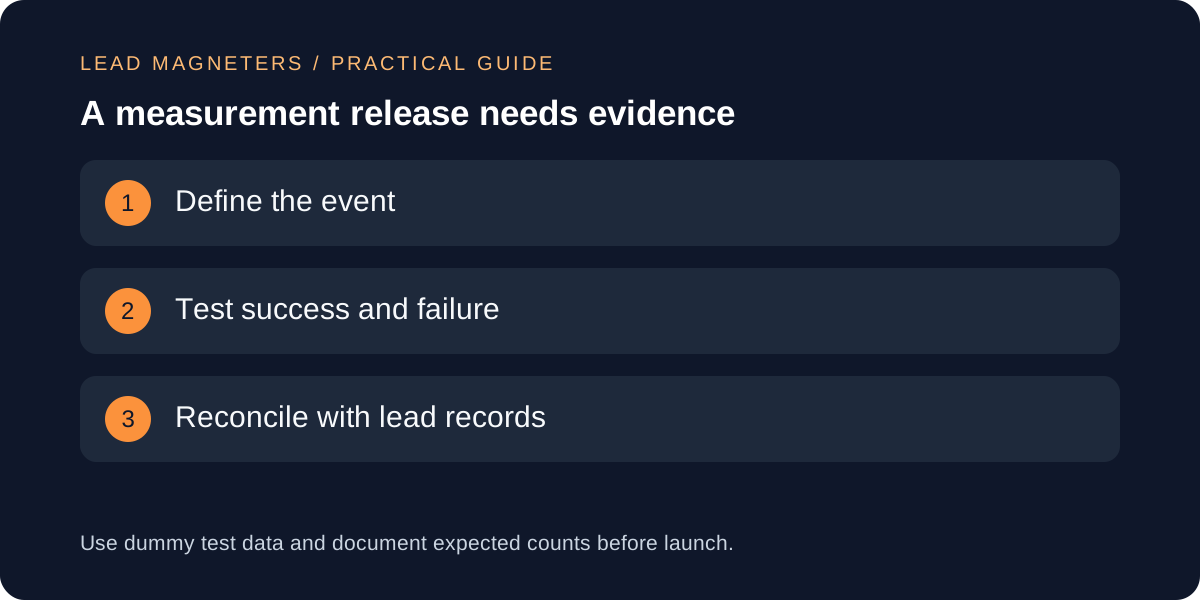
Test failure paths as carefully as successful submissions
Prepare a small test matrix before opening the analytics interface. Include a valid submission, an invalid required field, a blocked request, a second click while the first request is pending and a direct visit to any confirmation URL. For each case, state whether the enquiry should exist and how many success events you expect. Use obvious dummy data and a test process agreed with the team so that real customers are not contacted accidentally.
Google recommends tools such as DebugView and Realtime for checking incoming events. Pair that observation with evidence from the receiving system. An event appearing in a report does not show that an email arrived or that a lead record was created. Conversely, a valid enquiry may be missing from analytics because of consent choices, browser restrictions or implementation problems. Keep both observations in the test notes and investigate the reason rather than assuming that the two totals must always match exactly.
Build a report that supports a business decision
Start with a small comparison: enquiries received, enquiries reviewed, qualified enquiries and customers, with a clear date basis. Decide whether a report groups leads by the date they first arrived or by the date they moved stage. Those approaches answer different questions. A campaign launched this week may still be producing sales next month, so comparing today's spend only with today's closed customers can create a misleading conclusion about its value.
For a hypothetical example, imagine two campaigns with equal spend. One produces forty enquiries and four qualified leads; another produces twenty enquiries and six qualified leads. That would make the second campaign cheaper per qualified lead in this example, but it still says nothing about final revenue, margins or sales workload. Label examples as illustrative and calculate using your own agreed stages. Include unresolved leads in the discussion so that slow follow-up is not mistaken for poor advertising or weak website content.
Assign a review owner and a practical maintenance routine
Every measurement plan needs an owner who can notice when the underlying journey changes. A form redesign, CRM replacement, new consent tool or new language version can alter events even when the page still looks familiar. Include a small regression test in those releases. Keep the event worksheet versioned, record the last verification date and explain which reports are affected when a definition changes. This makes the system easier to trust and cheaper to maintain.
Ask the sales team for short, structured feedback on disqualified enquiries: unsupported service, irrelevant location, spam or another documented reason. Use that feedback to improve content, targeting and qualification questions rather than indiscriminately adding more form fields. Begin with the smallest reliable measurement setup and expand when a real decision requires more information. For a marketing consultation, bring one live enquiry journey, the existing event list and a sample of anonymised stage totals. Those inputs create a focused conversation about what is missing and which change would make reporting more useful.