A lead routing plan decides who takes responsibility when a new enquiry reaches your business. Small service teams often begin with a shared inbox and personal judgement, which can work until several people assume someone else has replied. The problem is not necessarily a lack of software. It is often an unclear handoff between receiving a message, assigning an owner and agreeing the next action. For teams serving Turkey, the United States and the Gulf, language and working hours add another layer. This guide explains a practical routing plan that can start simply and support automation later, without promising response times or sales results that your team has not demonstrated.
Define what ownership means in everyday work
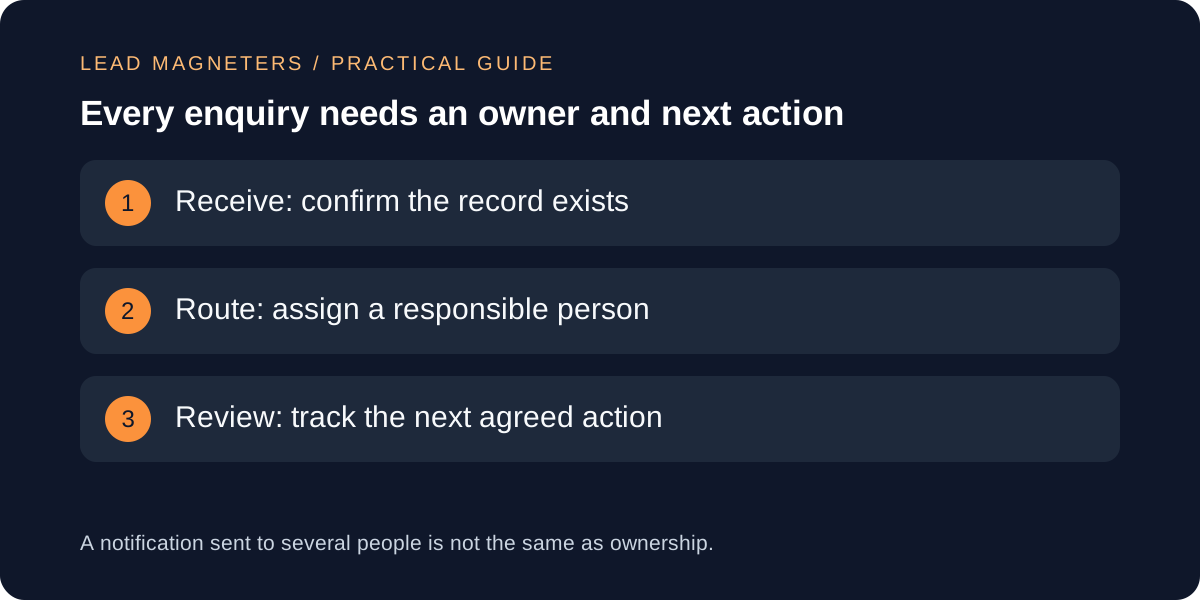
Choose one person responsible for progressing an enquiry at a given time. Other colleagues can contribute, but the owner should know whether the customer has been contacted, what information is missing and what happens next. A message forwarded to several people does not establish that responsibility. Write a short definition the team can use during a busy day, and agree how ownership is transferred when a different specialist becomes the right contact.
Keep the next action separate from a general status. A lead marked open may still have no scheduled follow-up, while a lead marked awaiting information should identify what was requested and when it will be reviewed. Start with a small set of fields that staff can maintain consistently. If a process requires lengthy notes before any action can happen, people may avoid updating it. Prefer clear ownership, a useful stage and a concrete next step over an elaborate record that quickly becomes stale.
Route by meaningful service and language needs
List the information needed to choose an appropriate owner. Service interest, supported language and an existing customer relationship may be more useful than a large collection of marketing attributes. Ask whether each rule improves the handoff or simply makes the workflow look sophisticated. A specialist technical enquiry might need a different first reviewer from a general consultation request. Where the information is missing, use a documented fallback instead of allowing the enquiry to remain unassigned.
For an illustrative Istanbul team, Turkish website enquiries could go to one responsible colleague, while English enquiries from international buyers go to another. That example only works if both people have the relevant capacity and service knowledge. Do not infer language solely from a person's name or assume that a location identifies their preferred communication style. Use the customer's stated preference where available, and allow the first reviewer to correct the assignment. Record those corrections so that repeated mismatches can improve the rule.
Plan working-hour coverage and exceptions
Write down what happens when an enquiry arrives outside the team's working hours. If there is an automatic acknowledgement, make its wording accurate and avoid presenting it as a personal reply. State only the response expectation that the business has agreed it can support. International customers may contact you during a local evening or holiday, so the routing plan should distinguish receipt from the first meaningful human response rather than treating them as the same event.
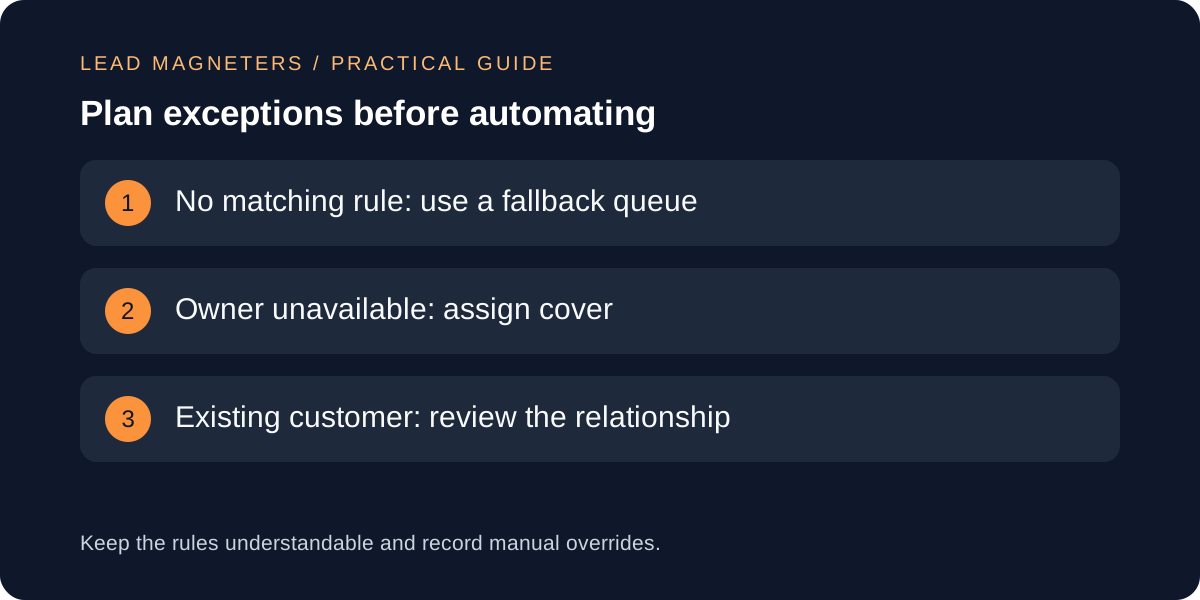
Define cover for absence, overload and unmatched requests. A fallback queue needs an owner and a review routine; otherwise it is simply another place for messages to be forgotten. Agree who can reassign work and how the new owner is notified. Include a route for urgent operational issues from existing customers so that they are not handled as ordinary new-business enquiries. Keep the rules short enough that a colleague can explain them without opening a complex workflow diagram every time an exception occurs.
Plan practical email and automation journeys →
Handle duplicates and existing relationships carefully
A customer may submit a form, send an email and call about the same project. Treating each contact as an unrelated lead can create duplicate replies and conflicting promises. Decide how the first reviewer checks for an existing record and what evidence is needed before linking contacts together. Avoid merging records merely because names look similar. Preserve the useful history and ensure that the person handling the enquiry can see which action has already been taken.
An existing customer requesting a new service may need both their relationship owner and a specialist involved. Specify who remains accountable during that handoff, rather than allowing a routing rule to overwrite the relationship automatically. Keep access appropriate to each role and avoid copying sensitive enquiry details into broad notifications when a record link is sufficient. The goal is continuity for the customer and clarity for the team, with a visible explanation when an automated assignment is changed by a person.
Test the workflow with a small scenario set
Before enabling automatic routing, create authorised dummy enquiries that represent the main paths: a supported service, an unknown service, a language preference, an absent owner and an existing customer. For each scenario, write the expected owner, notification and next action. Run the test through the real integration path in an appropriate test environment. Verify the resulting record and the receiving team's view rather than assuming that a successful form submission proves the routing has worked.
Include failure cases such as a temporarily unavailable integration or an invalid owner. Decide how those failures become visible and who investigates them. A retry should not silently create another customer record or trigger several acknowledgements. Keep the test results with the workflow description and repeat the relevant cases when staffing or service coverage changes. If the software cannot express the required rule reliably, use a simpler manual review step until the process can be supported without hidden exceptions.
Review workload and outcomes without confusing stages
Use a small operational report: unassigned enquiries, overdue next actions, records awaiting customer information and work by owner. Discuss why items are delayed before drawing conclusions about individual performance. A specialist may handle fewer records because those enquiries require more preparation. Google Analytics documents stages such as generated, qualified, working and converted leads, but a routing system still needs its own reliable implementation and definitions. Naming stages in a dashboard does not establish that staff are using them consistently.
Review a sample of completed and stalled journeys with the team. Look for avoidable handoffs, unclear questions and rules that send relevant enquiries to the wrong person. Use that feedback to simplify the process before adding more automation. For a marketing consultation, bring your enquiry sources, supported services, working-hour coverage and current ownership rules. A practical plan can then connect acquisition with follow-up, while preserving the human judgement needed to understand a customer's project and decide the right next conversation.