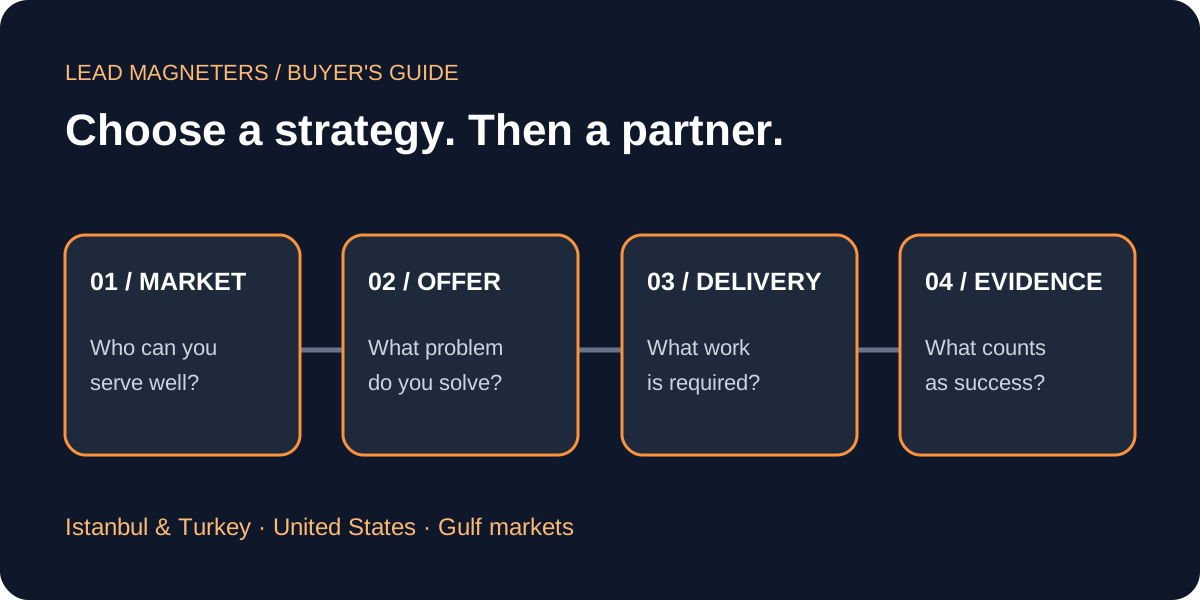
Choosing a digital marketing agency in Istanbul is a business decision, not simply a comparison of monthly retainers. The right partner needs to understand what you sell, which customers you can serve profitably, and what happens after someone completes your website form. A polished proposal can still leave those questions unanswered. This guide gives business owners a practical way to assess agencies in Turkey, whether the immediate goal is attracting local enquiries or reaching buyers in the United States and Gulf markets. It focuses on questions you can ask, evidence you can request, and decisions you can document before committing your budget. It does not rank agencies or promise a particular search position. Use it to create a shortlist that fits your actual commercial needs.
1. Define the commercial problem before choosing channels
Start with a one-page brief describing your priority service, ideal customer, service area, sales process and available capacity. A business seeking five complex B2B contracts needs a different plan from a shop seeking frequent local purchases. Include the questions your sales team hears repeatedly and the reasons otherwise interested buyers do not proceed. This information gives an agency something more useful than a request for more traffic.
Choose a measurable primary outcome: qualified consultations, completed purchases, booked demonstrations or another meaningful action. Then define what qualifies that action. An enquiry outside your delivery area, below your minimum order value or unrelated to your service should not count as a commercial win. Agree on these definitions before discussing campaign targets. They will shape the website, targeting, reporting and the time your team spends following up.
2. Separate local Istanbul demand from international demand
An agency located in Turkey does not automatically understand every market you want to reach. For an Istanbul audience, ask how the plan reflects actual neighbourhoods served, customer language and practical contact preferences. For a US buyer, discuss sales coverage, appointment times, currency presentation and delivery expectations. For Gulf campaigns, specify countries rather than treating the region as one identical audience. An Arabic-speaking buyer in Saudi Arabia may need different information from an English-speaking procurement team in the UAE.
Consider a hypothetical Istanbul-based manufacturer selling to US distributors and UAE buyers. Its useful website content might explain minimum quantities, export enquiries and product specifications, while its local content answers showroom or collection questions. These are different customer needs, not reasons to duplicate a page and replace the city name. Ask a prospective agency to show how research would change the message, landing page and qualification process for each audience. Start with a manageable market rather than launching everywhere at once.
3. Ask for an SEO plan built around useful pages
A credible SEO discussion should begin with your existing website: which pages describe your services clearly, which customer questions are unanswered, and whether search engines can access the important content. Ask for an explanation of the proposed page structure and internal links. A service page should help a buyer understand the offer; a supporting article should answer a distinct question and guide interested readers towards that service.
Google’s SEO Starter Guide explains the role of crawlable links, descriptive titles and useful, organised content. These are fundamentals, not a guarantee that a newly published page will rank. Request a prioritised work list with reasons for each change rather than a package measured only by article volume. If an agency suggests many near-identical location pages, ask what unique information each page adds for a real customer. A longer article is valuable only when the additional detail helps the reader make a decision.
4. Treat Google Maps visibility as a local requirement
If your business is eligible for a Google Business Profile, accurate business information is part of the local marketing foundation. Ask who will maintain your address, hours, services and contact details, and how the website will stay consistent with the profile. Do not invent additional offices to appear closer to customers. Serving a city remotely is not the same as operating a staffed location there.
Google describes local ranking in terms of relevance, distance and prominence. An agency can work on the accuracy and usefulness of your information, but cannot promise to eliminate the effect of distance or buy a better organic local position. Review management should focus on genuine feedback, helpful responses and policy-compliant reporting when appropriate. Removing legitimate criticism should never be the central promise of a local marketing package.
5. Evaluate Google Ads beyond clicks and impressions
For paid search, ask how the agency will connect search intent to your offer and landing page. Request examples of the types of searches it would include, exclude or investigate. A high volume of cheap visits is not useful when those visitors cannot become customers. Your proposal should distinguish the advertising budget paid to the platform from the agency’s management fee and any separate creative or development work.
Location settings deserve particular attention for international campaigns. Google Ads distinguishes people present in a target area from people showing interest in it, and the available settings affect who may see an ad. Neither approach is universally correct. An Istanbul service requiring in-person visits may need a different choice from a business selling Turkey-related services to overseas buyers. Ask the agency to explain the intended audience and review actual geographic performance rather than relying on the campaign name.
6. Check what happens after the visitor arrives
Open the proposed landing page on a phone and try the actions a buyer would take. Can you understand the service without scrolling through vague claims? Is the contact method obvious? Does the form work, and does the enquiry reach someone who can answer it? These checks may sound basic, but a campaign cannot compensate for a broken enquiry process or an offer visitors do not understand.
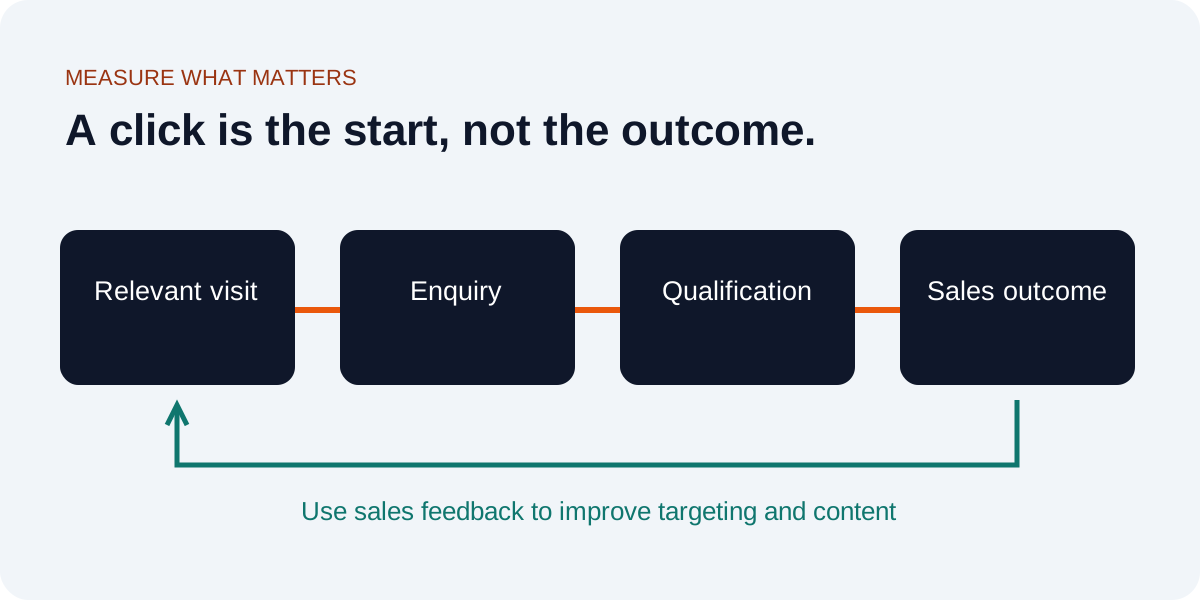
Discuss response ownership and response time alongside design. Decide who receives submissions, who qualifies them and how missed calls or incomplete enquiries are handled. Ask the agency to test tracking against actual submissions, not just button clicks. Useful reporting connects acquisition to qualified enquiries and, when your systems allow it, to sales outcomes. It should also acknowledge attribution gaps instead of presenting every tracked conversion as a confirmed customer.
See our website development service →
7. Compare proposals using the same scope
There is no single agency fee that fits every Turkish business or international campaign. A small website with one offer and a complex multilingual operation require different levels of work. Before comparing prices, ask each agency to list the markets, channels, pages, creative assets, tracking tasks and reporting included. Clarify revision limits, account ownership, subcontracting, cancellation terms and what happens to your assets if the relationship ends.
A useful comparison sheet has five headings: deliverables, responsible person, completion criteria, dependencies and cost. For example, a landing page deliverable should specify approved copy, responsive implementation, working forms and tracking validation, not merely page design. Keep media spend separate from service fees. Avoid accepting a numerical lead forecast without understanding its assumptions about demand, conversion rate, competition and your sales process. Estimates should be labelled as estimates and revisited when real evidence becomes available.
8. Request evidence without demanding impossible guarantees
Ask for relevant examples and an explanation of the work behind them. Which market was involved? What was the starting point? Which changes were made, over what period, and which outcomes can be attributed with confidence? Confidential client information may limit what an agency can share, but it should still explain its reasoning. A cropped dashboard image without context is not enough to establish what your business should expect.
Look for clear communication about uncertainty. Search rankings change, audiences differ and campaigns require adjustment. A strong partner can explain what it controls and what it cannot promise. You should retain appropriate access to your advertising, analytics and website accounts. Ask for a sample reporting discussion: what would the agency do if enquiry volume rose but lead quality fell? The answer reveals more than a promise of rapid growth.
9. Agree on an initial delivery plan
Use the first phase to establish access, a baseline and the most important fixes. The next phase can focus on one priority offer, its supporting content and a carefully defined campaign or search opportunity. A later review should examine lead quality, website behaviour and sales feedback before expanding the scope. These are suggested stages, not a promise that SEO results will arrive within a fixed number of days.
Document the decisions at the end of each review. Which market produced relevant conversations? Which questions should the website answer next? Is a service page missing important information, or does an existing article already cover the topic? A disciplined plan makes future content easier to turn into a clearly scoped service when there is a genuine customer need, instead of publishing an untested service claim simply to capture a keyword.
Your next step: bring a brief, not just a budget
Before choosing a digital marketing agency in Turkey, prepare your website address, priority service, target countries, customer qualification criteria and the main problem you want to solve. Bring a few examples of good and poor enquiries if you can share them safely. This gives the conversation a practical starting point and helps distinguish a tailored recommendation from a generic package.
Lead Magneters can discuss your SEO, advertising and website requirements through an initial consultation. Tell us whether your focus is Istanbul, the wider Turkish market, the United States or specific Gulf countries. We can then discuss the appropriate scope and next steps without assuming that every channel or every market needs to launch together. The aim is a coherent customer journey and a measurable business objective, not content production for its own sake.